



















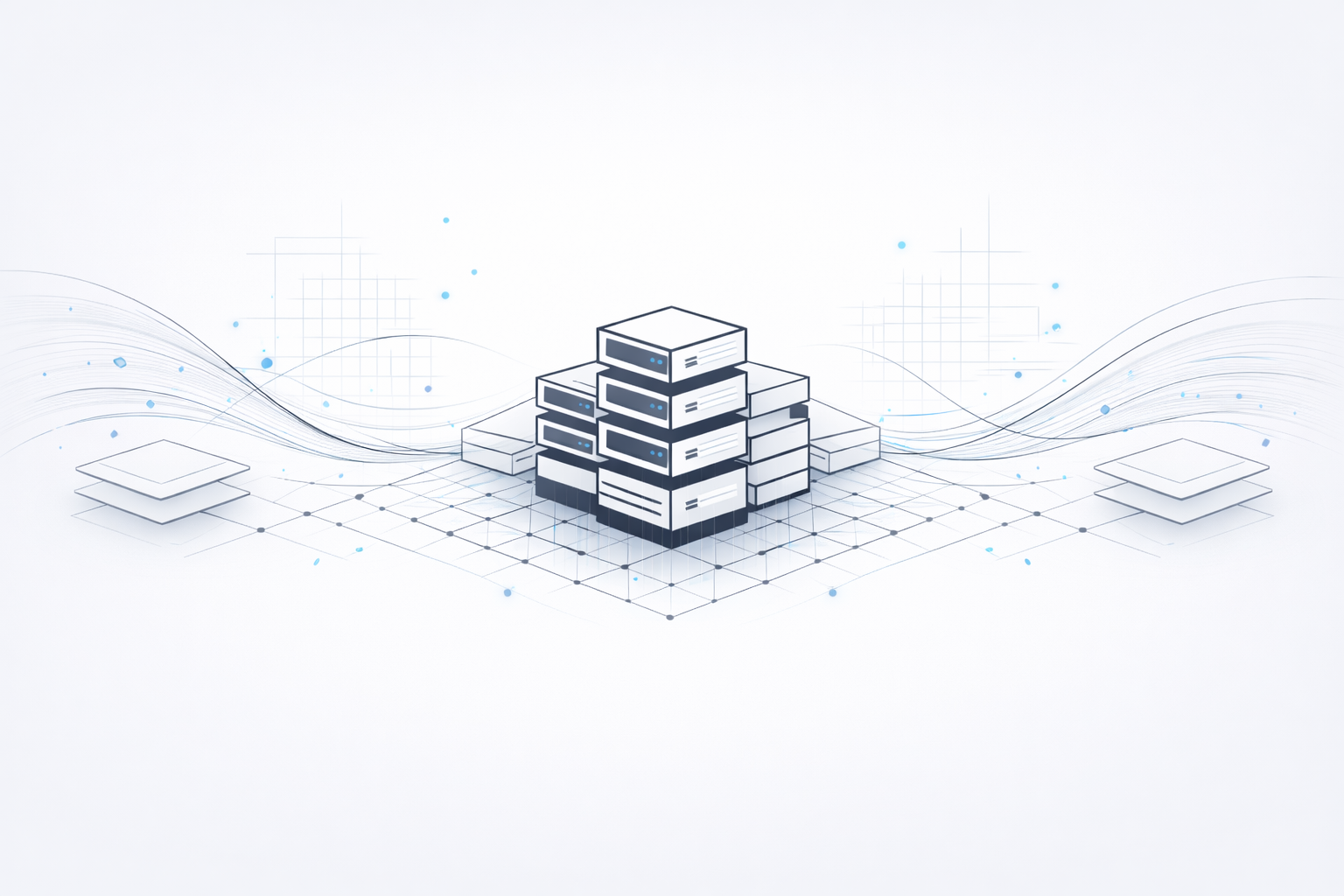




Dedicated Server DDoS Protection Checklist for 2026
If you are running a dedicated server in 2026, DDoS protection is not an add-on. It is a baseline requirement for staying online. The real issue is not whether you need a ddos protection dedicated server strategy, but whether your current setup could survive modern volumetric floods, application-layer abuse, or protocol-level exploitation.
Attack tools are cheap and accessible. Ransom-driven campaigns now hit mid-sized ecommerce brands and SaaS platforms just as often as large enterprises. Meanwhile, customers expect zero downtime, and the cost of outages now directly impacts revenue, brand trust, and compliance exposure.
This checklist is built to help infrastructure leaders assess whether their dedicated server DDoS protection architecture reflects today’s threat landscape. It clarifies what real protection includes, where mitigation should sit in the network path, how to evaluate filtering capacity claims, what logging and compliance standards look like in 2026, and which structural mistakes quietly increase risk.
What Dedicated Server DDoS Protection Really Means
A dedicated server provides isolated physical hardware. You control CPU cores, RAM allocation, storage architecture, and the network interface card. This isolation eliminates virtualization overhead and removes noisy neighbor risk that is common in shared environments. From a compute and performance perspective, that is a clear advantage.
However, isolation at the hardware level does not equal protection at the network level.
Many decision-makers ask, “Is a dedicated server better than VPS?” From a resource control standpoint, yes. From a security standpoint, it depends entirely on how the network is engineered. A dedicated server without upstream mitigation is just a powerful machine connected to an exposed pipe.
Another common assumption appears in questions like “Is dedicated IP faster?” or “Which type of server is best?” These questions focus on hardware configuration or IP allocation. But reliability and security are not determined by whether your IP is unique or your CPU is stronger. They are determined by where and how traffic is filtered.
If malicious traffic saturates your uplink, your CPU and RAM remain idle while the server becomes unreachable. This is why the question “What is the most reliable server?” cannot be answered by hardware specs alone. Reliability is a function of layered network defense.
A properly protected dedicated server is not defined by a firewall toggle. It is defined by architecture designed to prevent:
- Bandwidth exhaustion before traffic reaches your rack
- NIC saturation at the port level
- Kernel networking table overflow
- Application-layer process collapse
Different attack types exploit different layers of your stack. Volumetric floods overwhelm bandwidth upstream. Protocol attacks exhaust connection states through TCP manipulation. Application-layer attacks drain backend logic by targeting login systems, APIs, or checkout flows.
If filtering begins at the server firewall, the upstream network is already under strain. Effective mitigation must operate outside and ahead of the server boundary.
The governing principle remains simple:
Filtering must occur before saturation, not after.
Why 2026 Requires a Revised DDoS Checklist
Five years ago, “basic DDoS protection” usually meant a simple reactive setup. Traffic would spike beyond a preset threshold, mitigation would activate, and that was considered sufficient. That approach no longer holds up. It assumes attacks are predictable and sustained long enough to trigger detection. Modern attacks are neither.
Threat patterns have matured. Attackers now launch coordinated, multi-vector campaigns that blend large-scale volumetric floods with protocol manipulation and encrypted Layer 7 abuse. Short, high-intensity bursts are used specifically to slip under static thresholds. API endpoints are targeted for amplification because they are often less protected than public-facing pages. Malicious traffic can now hide inside legitimate TLS sessions, making basic filtering ineffective.
If your protection still relies on fixed detection rules, it is operating on outdated logic. Static defense invites adaptive offense.
A common buying question is, “Which type of server is best?” In 2026, that framing misses the point. The real differentiator is not whether the server is VPS, bare metal, or hybrid. It is whether the network architecture is designed to handle modern attack behavior. Hardware category matters far less than mitigation intelligence.
Another popular question is, “What is the most reliable server?” Reliability today is not defined by an uptime percentage printed in marketing material. It is defined by whether the infrastructure includes intelligent traffic discrimination, automated rerouting into scrubbing pipelines, always-on mitigation rather than delayed activation, and real-time anomaly detection capable of recognizing abnormal behavior before it escalates.
If mitigation only activates after traffic crosses a predefined threshold, there is a built-in exposure window. During that window, bandwidth can saturate, connections can drop, and services can degrade before filtering fully engages.
A modern DDoS evaluation checklist must go deeper. It should verify upstream absorption capacity with real numbers, assess the sophistication of Layer 3 and Layer 4 filtering, confirm whether encrypted traffic can be inspected intelligently, validate Layer 7 request protection for APIs and authentication systems, and ensure that monitoring and reporting provide operational transparency.
In 2026, the question is no longer, “Do I have DDoS protection?”
The real question is whether your infrastructure is engineered to reflect how attacks actually behave today.
Deploy Server in Minutes
Dedicated Servers
Core Components of Effective DDoS Protection for Dedicated Servers
Core Components of Effective DDoS Protection for Dedicated Servers
Protection must be measurable, architectural, and multi-layered. Marketing language is irrelevant. Structural validation is what matters.
1. Upstream Volumetric Filtering
Volumetric attacks target bandwidth first. They aim to overwhelm the uplink before packets even reach your operating system.
This leads to a practical evaluation question: How much does a dedicated server cost — and how much of that pricing includes real mitigation capacity?
Low-cost servers often rely on shared mitigation pools. During a large-scale event affecting multiple customers, shared capacity can become constrained. That means your protection is only as strong as the aggregate demand on the pool.
You must verify:
- Maximum absorption capacity in Gbps or Tbps
- Whether mitigation is always-on or triggered after detection
- Whether scrubbing capacity is shared or reserved
- Where scrubbing centers are physically located
If filtering only happens at the server firewall level, bandwidth can still saturate your port. Always-on upstream filtering ensures malicious traffic is intercepted before it impacts routing infrastructure.
2. Protocol-Level Mitigation
Protocol attacks do not require extreme bandwidth. They exploit weaknesses in connection mechanics.
These include:
- TCP handshake abuse and SYN floods
- UDP reflection and amplification
- Spoofed source traffic to exhaust connection states
When buyers ask, “What is the best CPU for a dedicated server?” they are focusing on compute performance. CPU power does not protect against protocol abuse. Connection table exhaustion happens at the networking layer, not at the application layer.
Effective protocol mitigation requires:
- Real-time packet behavior analysis
- Handshake integrity validation
- Abnormal rate detection
- Immediate spoofed packet filtering
Static firewall rules cannot handle adaptive attack patterns. Protocol mitigation must operate dynamically and upstream, not reactively inside the server.
3. Application-Layer (Layer 7) Protection
Layer 7 attacks are now one of the most common forms of disruption. They target application logic rather than bandwidth.
Instead of overwhelming the network, they exhaust:
- Login systems
- Checkout processes
- API endpoints
- Authentication services
A common misconception appears in questions like, “Do you need a good GPU to run a dedicated server?” For typical hosting workloads, GPU capability is irrelevant. What actually determines stability for web and SaaS applications is Layer 7 filtering intelligence.
A server can survive a massive volumetric flood yet still fail under sustained HTTP abuse.
Effective Layer 7 protection includes:
- Behavioral profiling to distinguish bots from humans
- Intelligent rate limiting
- Endpoint-specific validation rules
- Automated challenge mechanisms
Layer 7 mitigation must integrate tightly with upstream filtering. Fragmented systems increase latency and create operational blind spots.
4. Real-Time Monitoring and Operational Visibility
Visibility is control.
Infrastructure teams must have access to:
- Live traffic analytics
- Active mitigation event data
- Vector classification reporting
- Historical forensic logs
Without transparency, mitigation becomes blind trust.
Buyers sometimes ask, “What is the best dedicated IP provider?” The more relevant concern is not the IP allocation itself but how traffic flowing to that IP is monitored and filtered.
Real-time alerting allows teams to:
- Validate mitigation effectiveness
- Analyze attack patterns
- Confirm traffic normalization
- Preserve evidence for forensic review
In regulated industries, monitoring depth is as important as mitigation strength. Logging supports both operational resilience and compliance integrity.
5. Latency Preservation During Mitigation
Protection must not degrade performance.
Poorly designed mitigation can introduce:
- Routing instability
- Packet inspection delays
- Region-specific latency spikes
This connects directly to the search question, “Which is the best server in the world?” There is no universal best. The best server is one that remains stable under load — both legitimate and malicious.
You should validate:
- Average latency impact during active mitigation
- Routing optimization consistency
- Stability during peak legitimate traffic
The objective is not just to remain online. It is to maintain consistent user experience during attack conditions.
Where Filtering Must Occur
Mitigation effectiveness depends on filtering location.
There are three main levels:
- On-server firewall filtering
- Data center edge filtering
- Upstream scrubbing center interception
On-server filtering is reactive. By the time packets reach your firewall, bandwidth may already be saturated.
Data center edge filtering is stronger but still limited by facility capacity.
Upstream scrubbing intercepts malicious traffic before it impacts local network segments at all. This prevents saturation rather than reacting to it.
Buyers often ask, “Which type of server is best for storage?” or “What is the best server for storage?” Those questions focus on RAID levels, NVMe performance, or redundancy models.
But storage performance is irrelevant if your network link collapses under attack.
Network-layer filtering must operate before the server boundary. Otherwise, mitigation remains reactive and incomplete..
Dedicated Hosting and DDoS Integration
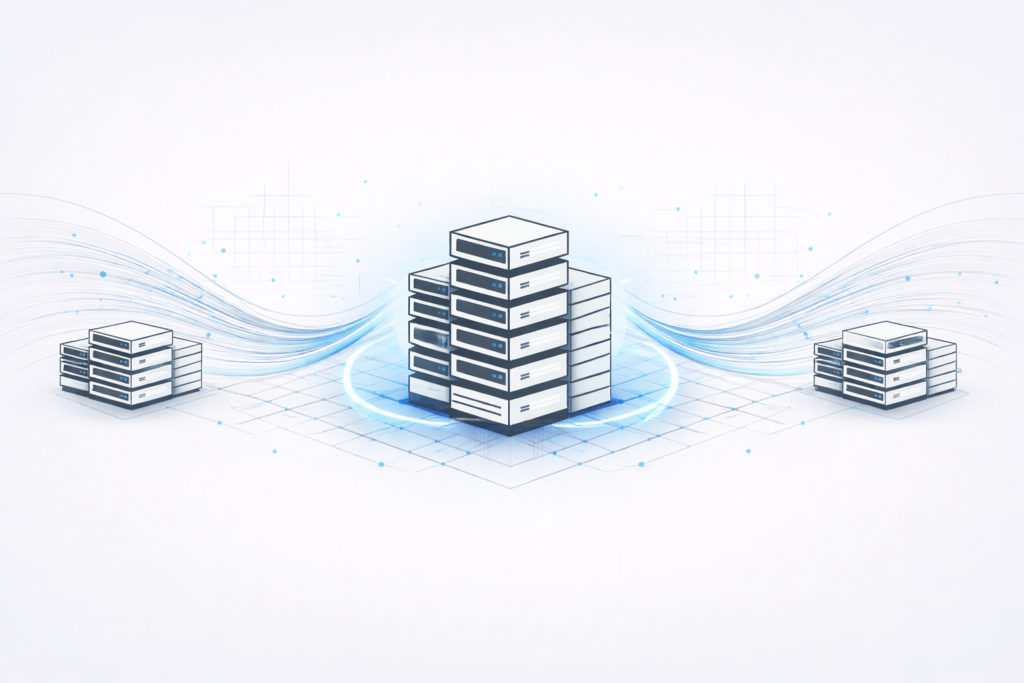
DDoS protection cannot be treated as a bolt-on upgrade layered on top of an existing server plan. It has to be engineered directly into the routing architecture. Real integration happens at the network level, where BGP routing policies are aligned with mitigation pipelines so that traffic can be intelligently managed before it impacts the server.
That integration should allow automated traffic diversion to scrubbing systems the moment an anomaly is detected, followed by clean traffic reinjection without introducing latency spikes or unstable routing paths. It also requires validated mitigation capacity thresholds that reflect real attack scenarios rather than theoretical limits.
Many buyers evaluate providers by asking a simple question: how much does a dedicated server cost? Cost is easy to compare across providers. Architecture is not. A lower price point can sometimes indicate shared mitigation pools, limited scrubbing capacity, or even manual rerouting processes that require human intervention during an active attack.
These limitations may not appear during normal operation but become critical under stress. Integrated architecture, by contrast, ensures automatic mitigation activation, stable routing continuity, and no manual downtime during attack events. Performance and protection must operate as a single coordinated system. If they function independently, resilience is compromised.
Compliance and Logging Considerations
DDoS mitigation now intersects directly with regulatory and compliance obligations. Organizations must evaluate more than just filtering strength; they must assess how mitigation data is handled operationally.
This includes reviewing log retention duration, understanding data residency policies, validating forensic reporting capabilities, and ensuring proper incident documentation processes are in place. Without these controls, mitigation may reduce immediate disruption but create long-term audit exposure.
For EU deployments in particular, GDPR alignment is essential. Traffic metadata handling must comply with jurisdictional requirements, especially regarding storage location and access control. When evaluating reliability, decision-makers should ask where mitigation logs are stored, how long they are retained, who has access to them, and whether reports can be exported for audit review.
Protection that simply blocks malicious traffic but discards evidence may reduce short-term impact while increasing regulatory risk later. In 2026, resilient infrastructure must balance uptime with audit accountability, ensuring both operational continuity and compliance integrity.
Common Weak Points in Dedicated Server Protection
Even well-configured servers fail when:
- Mitigation capacity is overestimated
- Shared mitigation pools are oversubscribed
- Application logic is inefficient
- API rate limiting is absent
A common misconception is that “enterprise hosting” automatically includes robust DDoS mitigation. Often it does not.
Another misconception: “We have never been attacked, so we are safe.”
DDoS targeting often escalates after visibility increases.
Preparedness must precede attack exposure.
Practical Implementation Expectations
Deploying effective ddos protection dedicated server architecture involves more than provisioning hardware.
Expect:
- Traffic profiling before mitigation configuration
- Collaboration between network and application teams
- Load testing under simulated attack conditions
- Ongoing capacity validation
Trade-offs include:
- Slight routing complexity
- Configuration overhead
- Budget allocation for higher mitigation tiers
Common mistake:
Treating mitigation as static. Traffic evolves. Attack vectors evolve. Mitigation must be periodically revalidated.
Edge case:
If your business operates flash-sale campaigns, mitigation must account for legitimate traffic spikes without triggering false positives.
Dedicated vs VPS in DDoS Context
Should you deploy dedicated infrastructure or VPS for protected environments?
Choose VPS when:
- Traffic is moderate
- Cost sensitivity is high
- Horizontal scaling is needed
Choose dedicated when:
- Revenue per minute is significant
- Workloads are latency-sensitive
- API throughput is heavy
- High-bandwidth requirements exceed shared environments
Dedicated infrastructure offers more predictable resource isolation, which simplifies DDoS modeling.
Is your workload stable enough to remain on VPS long-term?
2026 Dedicated Server DDoS Protection Checklist
Use this consolidated checklist:
- Upstream volumetric mitigation present
- Clear absorption capacity defined
- Protocol-level filtering implemented
- Application-layer protection active
- Real-time dashboards accessible
- Logging aligned with compliance needs
- Latency impact validated
- Mitigation tested under load
- Integration between hosting and security teams established
- Scalability planning documented
If any item above is unclear, further architectural review is necessary.
Decision-Making Guidance
Choose a provider offering strong dedicated server ddos protection if:
- Your uptime directly affects revenue
- You operate in regulated industries
- Your platform handles payments or APIs
- Brand reputation depends on uninterrupted access
DDoS protection may be less critical if:
- Traffic is low and non-commercial
- Downtime does not create financial impact
- Application complexity is minimal
However, risk exposure grows with visibility.
Are you comfortable explaining your mitigation strategy to investors or enterprise clients?
If not, it may need refinement.
Deploy Server in Minutes
Dedicated Servers
FAQs
1. What is ddos protection dedicated server?
It refers to upstream and application-layer mitigation integrated with dedicated server infrastructure to prevent bandwidth and resource saturation.
2. Is on-server firewall enough for ddos protection?
No. Firewalls cannot absorb volumetric bandwidth floods before traffic saturates network capacity.
3. How do I evaluate best ddos protection providers?
Review mitigation capacity, filtering location, transparency, latency impact, and compliance alignment—not just pricing.
4. Does dedicated server ddos protection slow performance?
Properly designed upstream mitigation should maintain stable latency and protect performance consistency.
5. Should I test my mitigation under simulated attack?
Yes. Periodic testing ensures that detection thresholds and routing behavior perform as expected.
Infrastructure Doesn’t Panic – It’s Designed to Withstand
By 2026, DDoS mitigation isn’t a checkbox feature you tack onto a server plan. It’s part of your core infrastructure strategy. A dedicated server gives you control over performance and configuration, but without properly integrated protection, that control can disappear the moment traffic spikes maliciously.
True resilience is engineered in advance. It’s built into network routing, filtering layers, and response mechanisms long before an attack ever happens. If your dedicated server and DDoS protection are not aligned at the architectural level, you’re operating on borrowed time.
Design your DDoS protection dedicated server setup the way you design any critical infrastructure: intentionally, proactively, and with scale in mind. Providers like NexonHost combine high-performance dedicated servers with network-level DDoS mitigation, helping businesses shift from reactive defense to built-in operational continuity.