
























Cloudddos Alternatives: Europe DDoS Servers
Cloudddos alternatives should be evaluated by how well they protect European workloads from downtime, latency issues, bandwidth saturation, and attack traffic. The right alternative is not simply another DDoS-labeled hosting plan. It should combine regional routing, clear mitigation logic, scalable server options, and support for VPS or dedicated infrastructure depending on workload risk.
For SaaS platforms, gaming servers, fintech apps, eCommerce brands, and hosting resellers, DDoS protection affects uptime, user experience, support volume, and revenue continuity. A small VPS, a high-bandwidth Linux server, and a dedicated server DDoS setup do not need the same protection model. Buyers comparing DDoS Protection Services should focus on where users are located, how traffic behaves, what must stay online, and whether the provider can scale protection as the business grows.
What Should Buyers Evaluate Before Choosing a Cloudddos Alternative?
The best cloudddos alternatives are providers that match DDoS protection to the actual workload, not just to a marketing label. A European buyer should verify mitigation method, server location, bandwidth policy, port capacity, routing quality, support response, and the upgrade path from VPS to dedicated infrastructure.
For smaller internal tools, a protected VPS may be enough. For public applications, gaming servers, SaaS platforms, and high-traffic websites, the risk profile changes. If the service is public, revenue-generating, or latency-sensitive, DDoS protection becomes part of business continuity planning rather than a technical extra.
A practical evaluation starts with three questions:
- What traffic must stay online?
A login portal, game server, checkout system, API gateway, and content platform have different uptime requirements. - Where are users located?
Europe-based users benefit from European routing when latency matters. A protected server far from the audience may still feel slow. - How does traffic behave under stress?
A site with predictable traffic needs different planning from a platform with spikes, downloads, bots, game traffic, or campaign surges.
The original insight many buyers miss is that DDoS protection should be sized around disruption cost. A smaller attack against a checkout page or game server may cause more business damage than a larger attack against a non-critical landing page.
For organizations that need protected infrastructure without moving the origin server immediately, Remote DDoS Protection is relevant when traffic filtering, IP protection, and uptime continuity need to be separated from a full hosting migration.
Deploy Server in Minutes
Dedicated Servers
Where CloudDDoS May Fall Short for European Workloads
CloudDDoS lists its data center facilities in Los Angeles, Hong Kong, and Singapore, but not in Europe. That matters for European SaaS platforms, gaming servers, eCommerce stores, and reseller workloads because DDoS protection is not only about filtering attack traffic. It also depends on where clean traffic is routed after mitigation.
For European users, a non-European origin or mitigation path can create avoidable latency, longer routing paths, and weaker regional fit. This does not automatically make CloudDDoS unsuitable for every buyer, but it does mean businesses needing DDoS protection Europe should verify whether the provider can support EU traffic, European data center proximity, and dedicated server DDoS requirements before choosing it as a long-term infrastructure option.
How Does Europe DDoS Server Infrastructure Protect Against Different Attack Types?
Europe DDoS server infrastructure works by combining server resources, network routing, traffic filtering, bandwidth planning, and access controls. The technical goal is to allow legitimate users through while reducing the impact of malicious or abnormal traffic before it overwhelms the server.
At the compute layer, CPU and RAM still matter. A protected VPS or dedicated server must have enough resources to handle legitimate traffic after filtering. DDoS protection will not fix an overloaded database, weak caching, poor application logic, or underpowered server plan.
At the network layer, bandwidth and port speed decide how much traffic the environment can tolerate before users feel disruption. A VPS may be suitable for lighter workloads, but public-facing platforms with sustained traffic may need stronger network capacity or dedicated server DDoS protection. Unmetered bandwidth can help with predictable billing, but it does not remove port limits or fair usage considerations.
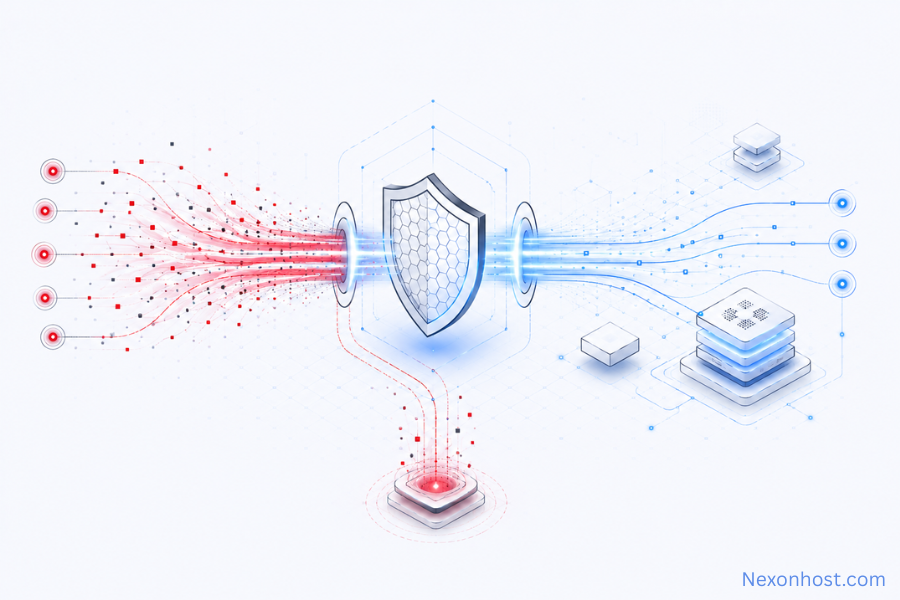
At the mitigation layer, filtering should handle different traffic patterns. Volumetric floods attempt to consume capacity. Protocol attacks abuse network behavior. Application-layer attacks pressure expensive endpoints such as login, search, API calls, or checkout. The provider’s ability to classify and filter traffic matters more than a vague “protected” badge.
CISA explains that denial-of-service attacks can prevent legitimate users from accessing systems, devices, or network resources, which is why DDoS planning should focus on service availability rather than server ownership alone.
For teams running Linux-based workloads, Linux VPS Unmetered can be a useful option when flexible server control, predictable bandwidth usage, and early-stage DDoS-aware hosting need to be balanced before moving into dedicated infrastructure.
Which European Workloads Benefit Most from DDoS-Protected Hosting?
DDoS protection Europe is most useful when the audience, infrastructure, or revenue path depends on low-latency access across European markets. The protection model should change depending on whether the workload is SaaS, gaming, eCommerce, media delivery, or reseller hosting.
For SaaS platforms, the most sensitive points are login, dashboards, API endpoints, background jobs, and customer-facing workflows. If traffic floods the API gateway or authentication layer, users may experience the platform as down even if the backend database is still running. SaaS teams should combine network mitigation with rate limiting, monitoring, and a clean scaling path.
Gaming servers need low latency and stable packet flow. A mitigation system that adds too much delay can damage gameplay, while weak protection can cause disconnects during attacks. Game operators should evaluate route quality, packet stability, filtering response, and support availability during peak player hours.
Streaming and CDN-heavy applications need bandwidth planning. Video files, downloads, software updates, and media libraries can create heavy legitimate traffic. In these cases, DDoS protection has to work alongside high bandwidth hosting rather than replace it.
Agencies and hosting resellers face a different issue: client concentration risk. One attacked client site can affect panels, shared tools, or other hosted projects if infrastructure is not segmented correctly. Resellers should avoid stacking unrelated high-risk workloads on one environment without isolation.
eCommerce stores need protection around campaigns, checkout, product search, and payment flows. Attack traffic does not need to fully take a store offline to hurt revenue. It can slow pages, overload checkout, and increase abandoned carts.
Businesses comparing implementation depth can review DDoS Protection Services when European traffic filtering, uptime protection, and public workload security need to be evaluated together.
Deployment Strategy for VPS and Dedicated Server DDoS Protection
A strong deployment strategy starts by classifying the workload before choosing the server type. VPS, dedicated servers, remote filtering, and unmetered plans all solve different problems. Buying the wrong layer creates avoidable cost and migration pressure later.
Use this decision logic:
- Choose VPS when the workload is controlled: VPS hosting can work for internal tools, staging environments, smaller websites, lightweight SaaS components, and lower-risk applications.
- Choose VPS DDoS protection when exposure is public but traffic is moderate: If a small app, portal, or development platform faces public traffic, protected VPS hosting may be enough before dedicated infrastructure is justified.
- Choose dedicated servers when isolation matters: A dedicated server becomes more practical for gaming, high-traffic SaaS, media delivery, client hosting, databases, and workloads where noisy-neighbor risk is unacceptable.
- Choose European locations based on users: Germany, Netherlands, Romania, and other European server locations can all make sense depending on audience concentration, routing, budget, and latency requirements.
- Plan bandwidth around peaks, not averages: Backups, file transfers, bot traffic, campaign surges, software updates, and attack traffic can expose weak bandwidth planning quickly.
- Build monitoring and backups before launch: DDoS mitigation does not replace uptime checks, external backups, log review, firewall rules, and recovery planning.
The UK National Cyber Security Centre recommends understanding services, defences, response planning, and testing when preparing for denial-of-service events, which directly supports evaluating DDoS protection providers by operational readiness, not only by advertised capacity.
For buyers comparing vendor models, DDoS Protection Providers is useful when support response, filtering approach, European routing, and scalability need to be reviewed before deployment.
How Does the Right DDoS Hosting Choice Affect Uptime, Revenue, and Scaling?
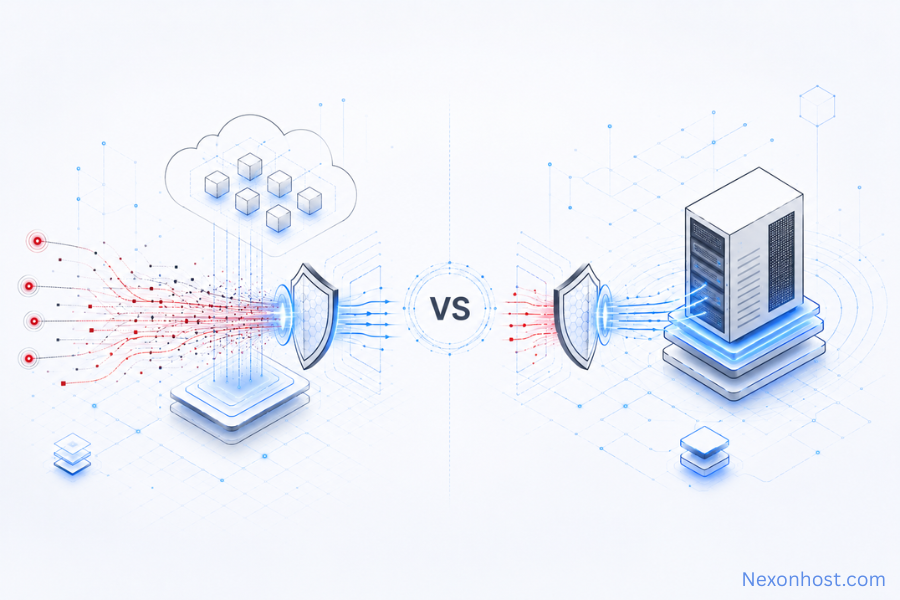
The right DDoS hosting choice protects uptime, customer experience, support workload, infrastructure ROI, and future scaling flexibility. The wrong choice creates hidden costs through poor latency, emergency migrations, slow incident response, bandwidth limits, and avoidable downtime.
For a SaaS company, availability affects customer trust and retention. For a gaming platform, latency and packet loss are immediately visible to users. For eCommerce, attack traffic can hurt checkout even before a full outage. For agencies and resellers, one vulnerable workload can create client management problems across multiple hosted accounts.
A commercial buyer should not ask only, “Which DDoS provider is cheapest?” The better question is: “Which provider protects the workload at the right layer without forcing us to overbuy infrastructure?” Sometimes the answer is VPS protection. Sometimes it is remote filtering. Sometimes it is a dedicated server with stronger network capacity.
A business should consider NexonHost when it needs European DDoS protection, flexible VPS options, remote protection paths, and the ability to scale toward dedicated infrastructure when the workload becomes more exposed. Buyers evaluating whether VPS protection is enough can review the VPS DDoS Protection Guide when comparing cost, risk, server type, and upgrade timing.
The simplest buying logic is this: use VPS protection when the workload is lighter and controlled, use remote DDoS protection when the origin needs filtering without a full move, and move toward dedicated infrastructure when uptime, bandwidth, and isolation become business-critical.
What Mistakes Cause Businesses to Choose the Wrong DDoS Protection Provider?
The biggest mistake is treating every DDoS-labeled hosting plan as equal. Protection quality depends on traffic filtering, network capacity, mitigation timing, support response, routing quality, and whether the plan fits the workload.
Another mistake is choosing only by price. Cheap protection may be enough for a low-risk website, but it can become expensive if support is slow, filtering is weak, or the provider cannot handle traffic incidents during peak usage.
Common edge cases include:
- Choosing the wrong server location: A European audience should usually be served from European infrastructure when latency matters. But the right European location depends on routing, not just geography.
- Underestimating bandwidth: Buyers often size for normal traffic and ignore backups, bot traffic, updates, file delivery, and attack traffic.
- Ignoring application-layer risk: Network protection helps, but login pages, APIs, search functions, and checkout flows may still need rate limits and monitoring.
- Using VPS after the workload outgrows it: Public applications with heavy databases, traffic spikes, or strict uptime needs may eventually need dedicated infrastructure.
- Overbuying dedicated infrastructure too early: Not every project needs a dedicated server on day one. The smart path is matching the server to real exposure.
- Skipping backups and monitoring: DDoS protection reduces attack disruption, but it does not replace recovery planning or infrastructure visibility.
For teams that want Linux control before moving to larger infrastructure, Linux VPS Hosting can be a practical step when application configuration, server access, and workload testing are still evolving.
Deploy Server in Minutes
Dedicated Servers
Choose Europe DDoS Hosting Around Workload Risk
The best Cloudddos replacement depends on what the server must keep online, where users are located, how much traffic the workload receives, and how quickly the business must respond during an attack. A protected VPS may be enough for smaller public applications, while gaming, SaaS, eCommerce, and reseller workloads may need stronger filtering and dedicated server DDoS planning.
The practical decision is not “VPS or dedicated?” It is “What level of protection keeps the workload reachable without wasting budget?” Start with exposure, traffic pattern, latency requirements, and downtime cost. Then choose the infrastructure layer that fits.
NexonHost is a practical option for businesses that need European DDoS protection, VPS flexibility, remote filtering, and a clear upgrade path toward stronger infrastructure. Review your workload honestly before choosing a plan.
Frequently Asked Questions
1. What are the best Cloudddos alternatives for Europe?
The best alternatives are providers that combine European routing, DDoS filtering, clear bandwidth policies, VPS or dedicated server options, and responsive support. Buyers should compare the workload type first. A small application may only need protected VPS hosting, while gaming, SaaS, media delivery, or reseller hosting may require dedicated infrastructure and stronger mitigation.
2. Do I need DDoS protection for a VPS?
Yes, VPS DDoS protection is useful when the VPS has public access, runs a website, hosts an API, supports login panels, or acts as part of a customer-facing service. A VPS can still be disrupted by network floods, exposed ports, or application-layer abuse. Protection should be paired with firewall rules, monitoring, backups, and access control.
3. Is dedicated server DDoS protection better than VPS protection?
Dedicated server DDoS protection is usually better for heavier workloads because dedicated infrastructure provides stronger isolation, more predictable resources, and more control over bandwidth planning. VPS protection can still be enough for smaller workloads. The upgrade point comes when traffic, customer exposure, attack risk, or performance demands make shared virtual resources too limiting.
4. Which European server location is best for DDoS protection?
The best European location depends on where users are, how traffic is routed, and how sensitive the workload is to latency. Germany, Netherlands, Romania, and other European locations can all work depending on the audience. Buyers should test routes from real user regions instead of assuming one country is automatically best.
5. How much bandwidth does a DDoS protected server need?
Bandwidth depends on normal traffic, peak usage, backups, downloads, bot activity, and expected attack exposure. A small website may need modest capacity, while gaming, streaming, SaaS, and high-traffic platforms may need more headroom. The server port, traffic policy, and mitigation method should be checked together before buying.
6. Can DDoS protection stop all attacks?
No provider should claim that DDoS protection stops every possible attack. Good protection reduces risk by filtering malicious traffic, absorbing floods, and helping legitimate users remain connected. It should be combined with application hardening, rate limiting, monitoring, backups, incident planning, and sensible server sizing.
7. When should I move from protected VPS to dedicated DDoS hosting?
Move when the workload needs stronger isolation, higher bandwidth, lower latency risk, more predictable performance, or better control during attacks. This often happens with gaming servers, SaaS platforms, eCommerce stores, reseller hosting, media delivery, and applications where downtime affects revenue or customer trust.