



















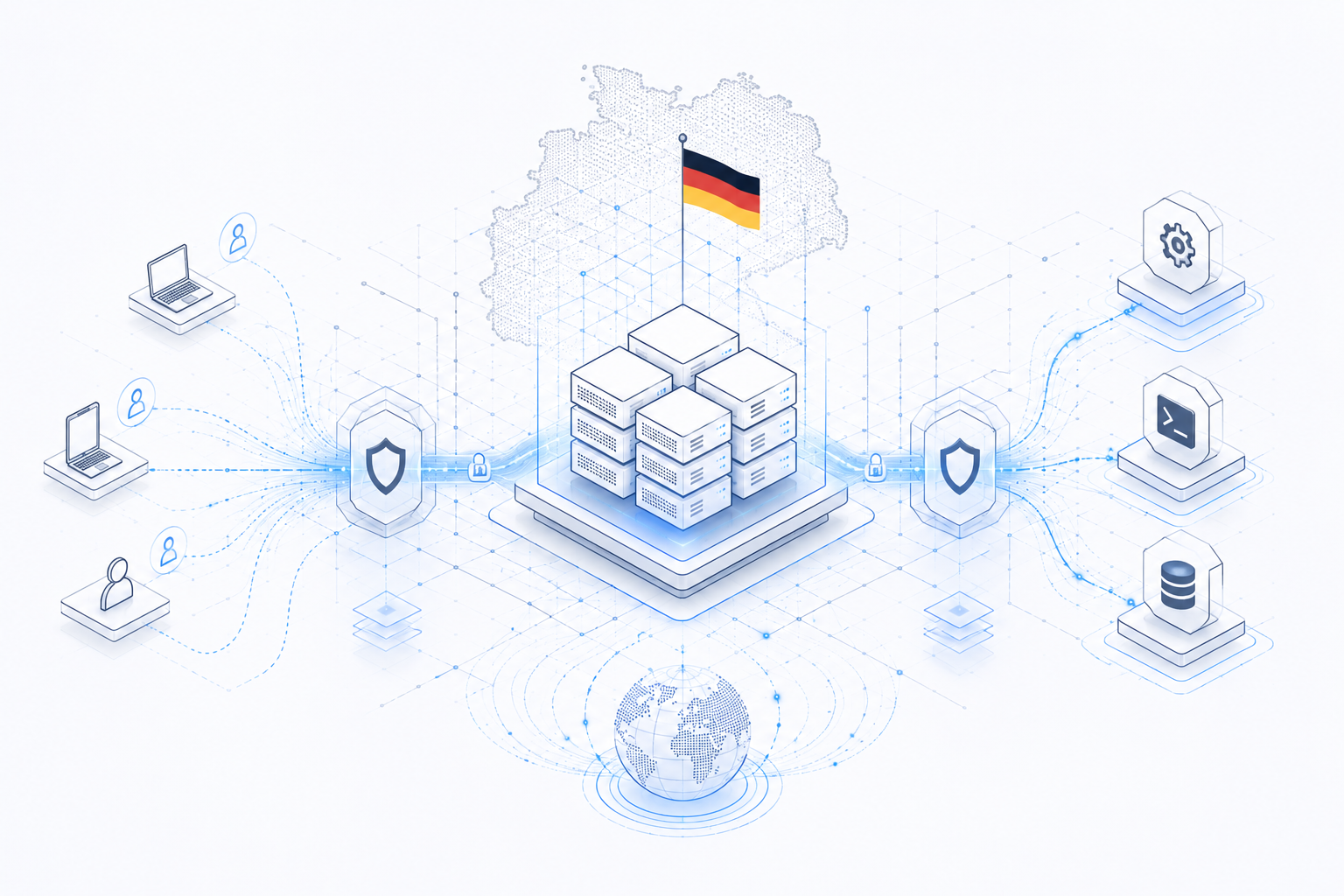




Buy VPS Germany for Internal Business Tools and VPN Gateways
A business should buy vps germany when it needs a secure, low-latency European server for internal dashboards, VPN gateways, admin tools, private applications, or controlled team access. Germany VPS hosting is useful when shared hosting is too limited, but a dedicated server is more capacity than the workload currently needs.
For SaaS teams, agencies, fintech operators, developers, and infrastructure teams, the real decision is not only server price. It is whether the VPS can support stable access, secure routing, bandwidth headroom, backup planning, and controlled scaling. A German VPS can work especially well when employees, customers, or systems are concentrated across Europe and need reliable access to business-critical tools. Buyers comparing VPS hosting in Europe should evaluate location, CPU allocation, storage, network quality, DDoS protection, support, and upgrade flexibility before choosing a plan.
When Should a Business Buy VPS Germany for Internal Tools and Private Access?
You should buy vps germany when your internal tools need better control, stronger isolation, and more predictable access than shared hosting can provide. A Germany VPS gives businesses a practical middle ground between low-cost hosting and full dedicated infrastructure.
For internal business tools, the VPS often runs services that are not public marketing websites. These may include private CRM dashboards, project management panels, analytics tools, staging environments, automation scripts, lightweight databases, internal APIs, Git services, monitoring tools, or VPN gateways. These workloads need consistency more than flashy specifications.
A good germany vps provider should be evaluated on practical infrastructure fundamentals:
- CPU consistency: Internal tools may not need huge CPU capacity, but they do need predictable response during working hours.
- RAM allocation: Dashboards, VPN sessions, databases, and background scripts need enough memory to avoid slowdowns or service restarts.
- Storage type: SSD or NVMe storage is useful when internal applications read and write logs, sessions, database records, or user activity.
- Network routing: A VPS in Germany should serve European users with sensible routing, not just a German label on the plan.
- Security controls: Firewall rules, SSH hardening, private access policies, and DDoS protection matter even for tools with limited users.
The main expert decision point is simple: do not buy VPS capacity based only on average usage. Internal tools often look lightweight until multiple employees connect through VPN, reports run in the background, backups start, and API jobs execute at the same time.
For buyers trying to control cost before scaling, buy vps germany without overpaying is relevant when the goal is to match resources to workload needs instead of paying for unused capacity too early.
Deploy Germany VPS in Minutes
Business VPS Hosting
How Germany VPS Hosting Supports VPN Gateways, Admin Tools, and Private Applications
A Germany VPS works by giving your business an isolated virtual server environment on physical infrastructure located in or routed through Germany. For VPN gateways and internal tools, the important layers are compute allocation, storage reliability, traffic routing, network filtering, and access control.
The CPU layer handles encryption, application logic, admin panels, automation jobs, and background tasks. VPN gateways can be CPU-sensitive because encrypted tunnels require processing. A small VPS may work for a few users, but larger teams or always-on encrypted traffic may need more CPU headroom.
RAM affects how many services can run comfortably at the same time. A VPS hosting Germany setup that runs a VPN gateway, admin dashboard, database, reverse proxy, monitoring agent, and backup process needs memory planning. Underallocating RAM creates unstable behavior that looks like “random hosting problems” but is usually bad sizing.
Storage affects logs, access records, application data, and backup staging. For internal tools, storage speed matters less than database-heavy eCommerce, but reliability matters heavily. If logs, authentication data, or internal records are lost, the operational damage can be larger than the size of the application suggests.
Network quality is the layer many buyers underestimate. A vps server germany plan should be judged by routing, bandwidth policy, DDoS handling, and whether the provider can support consistent access for European users. This is especially important when a VPN gateway becomes the entry point for staff, contractors, or remote teams.
The German Federal Office for Information Security notes that fundamental safeguards for web applications include firewalls and appropriate DDoS mitigation safeguards, which supports the practical need to treat network protection as part of hosting architecture, not a cosmetic add-on.
If the VPS supports customer-facing stores or payment-related environments later, teams should also review a website ddos protection ecommerce guide because public traffic introduces different attack and availability risks than private internal access.
Which Business Use Cases Are Best Suited for Germany VPS Hosting?
Germany VPS hosting is useful when a business needs controlled European infrastructure without immediately moving to dedicated servers. The right use case depends on traffic type, user location, risk level, and how much control the technical team needs.
For SaaS platforms, a germany vps server can host staging environments, internal admin panels, background workers, QA tools, or region-specific services. Production SaaS workloads may eventually need dedicated infrastructure, but VPS hosting can be a clean starting point when the system is still modular and traffic is manageable.
For agencies, a VPS in Germany can run client staging sites, project dashboards, internal reporting systems, shared development environments, and private automation tools. The risk here is operational clutter. Agencies often put too many unrelated tools on one VPS because it feels convenient. That becomes a problem when one misconfigured service exposes the entire environment.
For fintech and SaaS teams, server location and access control matter more than generic “fast hosting” claims. A European VPS can help keep internal services closer to users and teams operating in the region. Teams building regulated or sensitive applications still need their own compliance, access, logging, and data handling review. Hosting location helps, but it does not replace governance.
For gaming teams, a German VPS may support community panels, control dashboards, voice coordination tools, update servers, lightweight game services, or monitoring infrastructure. Latency matters, but so does route stability. A cheap VPS with inconsistent network behavior will create complaints even if the advertised location looks good.
For hosting resellers and technical operators, VPS hosting in Germany can support private DNS tools, automation panels, monitoring, backups, and support systems. The key is separation. Internal control systems should not be mixed carelessly with public client workloads.
For teams evaluating industry-specific hosting needs, vps hosting in germany for fintech saas is useful when application access, security posture, and infrastructure planning need to be more deliberate than a basic VPS purchase.

How to Plan a Germany VPS Deployment for Security, Bandwidth, and Scaling
A good deployment strategy starts with the workload, not the server plan. Before choosing vps hosting in germany, define what the VPS will run, who will access it, how much traffic it will handle, and what happens if it goes offline.
For internal tools and VPN gateways, use this practical deployment logic:
- Choose VPS when the workload is controlled: A Germany VPS is suitable for internal dashboards, team VPN access, staging tools, lightweight APIs, monitoring, and automation workloads with predictable usage.
- Move to dedicated infrastructure when isolation becomes critical: If the VPS begins supporting payment systems, heavy databases, high-volume traffic, or multiple business units, a dedicated server may become more practical.
- Select Germany when users need European proximity: Germany can be a strong choice when employees, customers, or systems are concentrated in Central and Western Europe. The real test is routing quality, not the country name alone.
- Plan bandwidth around peak usage: VPN traffic, backups, file transfers, updates, and monitoring logs can consume more bandwidth than expected. Do not size only for normal dashboard traffic.
- Build security before launch: Harden SSH, restrict ports, use firewall rules, separate admin access, enforce strong authentication, and monitor suspicious login attempts.
- Keep backups separate from the VPS: A backup stored only on the same VPS is not a real recovery plan. If the server fails or is compromised, the backup may fail with it.
NIST storage security guidance recommends defining backup frequency, retention, backup type, media, and encryption requirements, which is directly relevant when a VPS hosts internal tools that the business must recover reliably.
For latency-sensitive deployments, low latency hosting europe is useful when network path, user geography, and application responsiveness matter more than simply choosing the lowest monthly VPS price.
How the Right German VPS Plan Improves Access, Productivity, and Cost Control
The right German VPS plan improves business operations by giving teams controlled access, stable performance, predictable cost, and a clearer scaling path. The wrong plan creates hidden costs through downtime, slow internal tools, support delays, security gaps, and emergency migrations.
For internal tools, performance affects employee productivity. If a private dashboard is slow, staff waste time waiting for routine actions. If a VPN gateway is unstable, remote teams lose access to systems. If monitoring tools lag, infrastructure teams react late. These are not abstract technical issues. They affect daily operations.
Latency matters because internal systems are often used repeatedly throughout the day. A small delay repeated across dozens of logins, reports, sync jobs, and admin actions becomes real productivity loss. For European teams, Germany can be a practical location when it shortens network paths and keeps access responsive.
Cost control also needs honest planning. A cheap vps germany plan may be fine for a basic admin tool, but it may be a bad fit for VPN traffic, file movement, and continuous background services. On the other side, buying a dedicated server too early may tie up budget before the workload needs it.
A business should consider NexonHost when it needs European VPS infrastructure for secure internal tools, private access, VPN gateways, and growth-ready hosting. Buyers ready to compare plans can review German VPS plans when they need Germany-based VPS hosting with a clearer commercial deployment path.
The decision should be based on five questions:
- Does the VPS location match the users or team?
- Does the plan include enough CPU and RAM for peak usage?
- Is bandwidth suitable for VPN traffic and backups?
- Is DDoS protection part of the hosting setup?
- Can the workload scale without a disruptive migration?
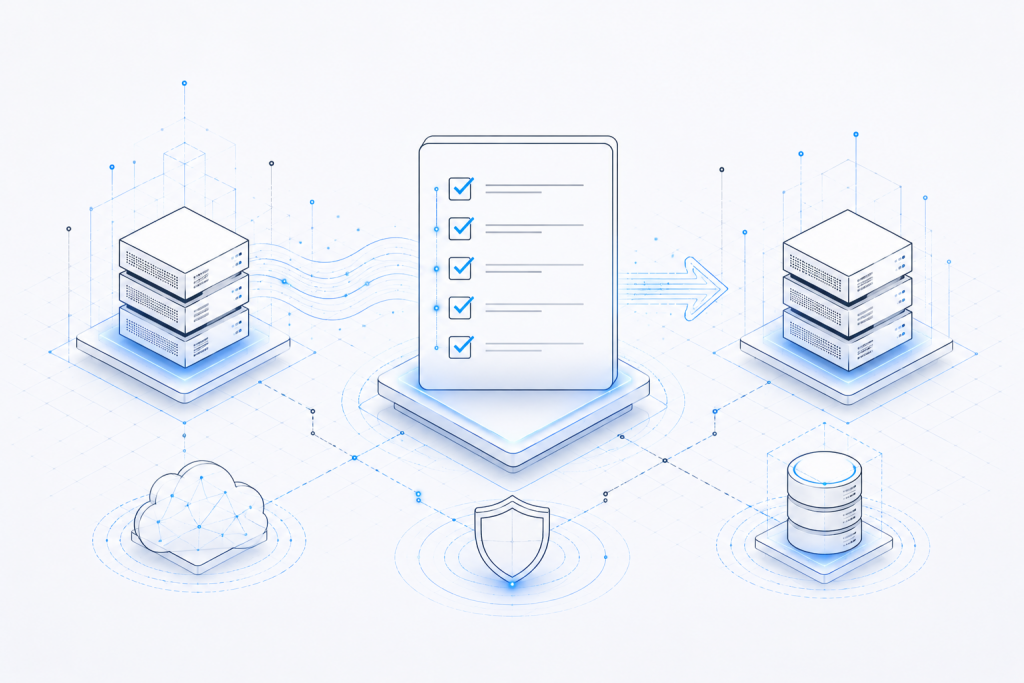
What to Avoid When Buying VPS Hosting in Germany for Business Workloads
The most common mistake is choosing a German VPS only because the price looks attractive. That approach ignores the real reasons businesses buy VPS infrastructure: control, location, access reliability, workload isolation, and scalability.
A second mistake is choosing Germany without checking user geography. If most users are in another region, Germany may not be the best location. Server location should follow traffic concentration, team access patterns, and latency requirements.
Many buyers also underestimate VPN bandwidth. A VPN gateway does not only carry login traffic. It may carry file transfers, admin sessions, remote desktop access, database access, security scans, and software updates. A plan that looks generous for a small website may be weak for internal network access.
Another mistake is mixing too many workloads on one VPS. Putting VPN, production applications, staging sites, client tools, monitoring, and backups on the same server creates operational risk. If one service fails or is misconfigured, the entire environment can be affected.
Some teams ignore DDoS protection because the VPS is “internal.” That is flawed thinking. If the server has a public IP, exposes VPN access, or supports admin tools, it still needs careful protection. Private use does not automatically mean private exposure.
Overbuying is also a real issue. Not every team needs dedicated infrastructure on day one. A properly sized Germany VPS can be the smarter first step if the workload is controlled. When the workload becomes heavier, businesses can evaluate dedicated servers, server colocation, or hybrid setups. Teams comparing physical infrastructure options can review dedicated server colocation europe when VPS hosting no longer provides enough control, isolation, or hardware flexibility.
Deploy Germany VPS in Minutes
Business VPS Hosting
How to Choose Germany VPS Hosting Based on Workload, Location, and Growth Needs
A Germany VPS is a practical choice when internal tools, VPN gateways, private dashboards, and European access need more control than shared hosting but less commitment than dedicated infrastructure. The smart buying decision is not the cheapest VPS. It is the VPS that matches the workload, user location, bandwidth pattern, security risk, and growth path.
For lightweight internal systems, a properly sized VPS can keep costs controlled while giving teams root access, custom configuration, and better isolation. For heavier traffic, strict isolation, or critical production workloads, dedicated infrastructure may become the better next step.
NexonHost is a practical option for businesses that need secure European hosting, Germany VPS options, DDoS protection, and infrastructure that can scale as internal systems become more important. Review the workload first, then choose the plan. That is how you avoid paying twice for the wrong setup.
Frequently Asked Questions
1. Is Germany good for VPS hosting?
Germany can be a strong VPS hosting location when your users, employees, or systems are based in Europe. It is especially useful for internal tools, VPN gateways, SaaS admin panels, and business applications that need low-latency European access. The decision should still depend on routing quality, server resources, bandwidth policy, DDoS protection, and support, not country alone.
2. What is the best VPS server in Germany for business use?
The best VPS server in Germany for business use is the one that matches your workload, not simply the highest advertised specification. Internal tools may need stable CPU, enough RAM, secure access, backups, and predictable bandwidth. VPN gateways need stronger network consistency and encryption headroom. A good plan should also offer a clean upgrade path.
3. Can I use a Germany VPS as a VPN server?
Yes, a Germany VPS can be used as a VPN server when it has enough CPU, RAM, bandwidth, and network stability for encrypted traffic. The VPS should be hardened before use, with limited open ports, strong authentication, firewall rules, and monitoring. For larger teams or heavy file transfers, bandwidth and CPU headroom become more important.
4. How much RAM do I need for a Germany VPS?
RAM depends on what the VPS runs. A simple VPN gateway or lightweight admin tool may need modest memory, while a VPS running databases, monitoring, dashboards, and background jobs needs more. Do not size RAM only for idle usage. Check peak usage, concurrent users, backup jobs, logs, and application services before choosing a plan.
5. Is VPS hosting in Germany better than shared hosting?
VPS hosting in Germany is usually better than shared hosting when you need root access, custom software, stronger isolation, private services, or more predictable resources. Shared hosting may work for basic websites, but it is not ideal for VPN gateways, internal business tools, custom applications, or workloads that need firewall control and dedicated configuration.
6. Do I need DDoS protection for a Germany VPS?
Yes, DDoS protection is useful if the VPS has public-facing access, runs a VPN gateway, hosts admin tools, or supports customer-related services. Even internal tools can be exposed through public IPs, login panels, or remote access ports. DDoS protection should be combined with firewall rules, authentication controls, monitoring, backups, and sensible access restrictions.
7. When should I move from Germany VPS hosting to a dedicated server?
Move from VPS to dedicated hosting when the workload needs stronger isolation, predictable CPU performance, higher bandwidth, larger databases, or stricter control over the server environment. If your VPS supports revenue-critical applications, high user concurrency, or multiple business units, dedicated infrastructure may reduce operational risk and make scaling cleaner.