Unmetered Dedicated Servers for High-Bandwidth Workloads: What Actually Matters
High-bandwidth workloads are no longer limited to niche use cases. Streaming platforms, large-scale SaaS products, content distribution systems, analytics pipelines, and security-sensitive applications now move terabytes of data daily as part of normal operations. In this environment, bandwidth is not a supporting metric – it is a primary infrastructure constraint.
This shift is why unmetered dedicated servers have moved from a specialist option to a mainstream infrastructure decision. Buyers evaluating dedicated unmetered servers are no longer asking whether they might need high bandwidth. They are asking how to sustain it without unpredictable cost, throttling, or performance collapse under load.
This guide explains what unmetered dedicated servers actually deliver, where they are appropriate, where they are misunderstood, and how to evaluate providers offering high bandwidth dedicated servers without relying on marketing claims.
Why Unmetered Bandwidth Exists in the First Place
Bandwidth pricing was never designed for today’s internet. It was created in an era when traffic patterns were relatively stable, predictable, and slow-growing. Businesses could estimate usage, plan for peaks, and rarely worried about sudden multi-terabyte spikes.
That world no longer exists.
Modern infrastructure runs on APIs, video streaming, constant synchronization, software delivery, backup replication, and always-on services. Traffic is not seasonal – it is continuous. When workloads generate sustained outbound and inbound data, the old metered logic starts to break.
So the real question becomes: Should infrastructure decisions be shaped by performance needs or by fear of bandwidth bills?
Metered billing introduces two structural problems. First, cost volatility grows faster than revenue for many digital businesses. Second, teams start limiting usage – not because the system can’t handle it, but because the invoice might. That hesitation directly slows innovation.
Unmetered dedicated servers emerged as a response. By removing per-GB billing anxiety, they allow architects to design systems based on reliability, scale, and user experience rather than cost avoidance. In short, unmetered models exist because the modern internet stopped behaving predictably.
What “Unmetered” Actually Means (And What It Does Not)
Many buyers assume “unmetered” equals infinite. It does not. And misunderstanding this is one of the fastest ways to make a poor infrastructure decision.
Unmetered is a billing model, not a physics breakthrough. You are not charged per TB, but traffic is still limited by real-world factors. A useful way to think about it is: Are you paying for volume, or are you paying for capacity?
Unmetered typically means no per-GB billing and no usage-based tracking for invoices. Traffic can flow continuously without triggering extra charges. However, throughput is governed by port speed, upstream limits, and network engineering.
It does not mean unlimited throughput. It does not mean no fair-use policies. It does not mean providers can ignore congestion realities.
Understanding this difference separates informed buyers from those chasing marketing language. When comparing dedicated unmetered servers, clarity on this point prevents unrealistic expectations and future disputes.
High Bandwidth Dedicated Servers vs Metered Alternatives
Metered servers are optimized for average usage. Unmetered servers are optimized for sustained demand. That difference seems subtle on paper but becomes obvious in production.
If your traffic is steady, bursty, or driven by external user behavior, metered pricing starts to punish growth. Every spike becomes a financial variable. That leads to an uncomfortable question: Should success increase risk?
High bandwidth dedicated servers support workloads where traffic is constant or unpredictable. Streaming platforms, software distribution networks, analytics ingestion pipelines, and SaaS platforms with global users all fall into this category.
In these cases, metered pricing doesn’t just add cost – it adds friction. Unmetered infrastructure removes that ceiling and allows growth without artificial limits. It aligns infrastructure with business momentum instead of restricting it. The comparison is easiest to read on the invoice rather than the spec sheet, which is how the unmetered dedicated server page lays the two models out line by line.
Bandwidth Is Not the Same as Network Quality
A common mistake is assuming bandwidth volume equals performance. It doesn’t. Two providers can advertise the same unmetered bandwidth and deliver drastically different real-world results.
The smarter question is: What happens under peak load, not just during a demo?
Network quality depends on carrier diversity, peering relationships, congestion control, and internal design. If upstream routes are weak or oversaturated, advertised bandwidth becomes meaningless.
High bandwidth only has value if the network sustains throughput during demand surges. Otherwise, you are buying theoretical capacity rather than usable performance. Infrastructure decisions require looking beyond port numbers and into network architecture.
Port Speed vs Real Throughput
Buyers often fixate on port speed – 1 Gbps, 5 Gbps, 10 Gbps – assuming that defines usable performance. In reality, port speed is just the door size. What matters is how crowded the hallway is.
So the practical question becomes: Can the provider sustain that speed consistently?
Oversubscription, traffic shaping, and cross-rack contention all influence real throughput. A poorly engineered 10 Gbps port can underperform a well-managed 5 Gbps port.
Sustained throughput testing reveals more than advertised limits. Serious buyers test under load, at different times, and across routes. That is how actual capacity is measured, not through spec sheets.
Deploy Server in Minutes
Dedicated Servers
Risk Profiles That Demand Unmetered Dedicated Servers
Some workloads carry risk when bandwidth becomes constrained. In those cases, bandwidth is not a luxury – it is insurance.
Platforms exposed to attacks, unpredictable user spikes, or uptime-sensitive operations cannot afford throttling. The key question is: What happens when demand exceeds forecasts?
Customer-facing apps, compliance-driven systems, and services where downtime equals revenue loss fit this profile. For them, unmetered servers act as a buffer against the unknown.
This is not about performance upgrades. It is about risk mitigation. When availability matters, removing billing-linked constraints becomes a strategic decision.
DDoS Exposure and the Role of Unmetered Bandwidth
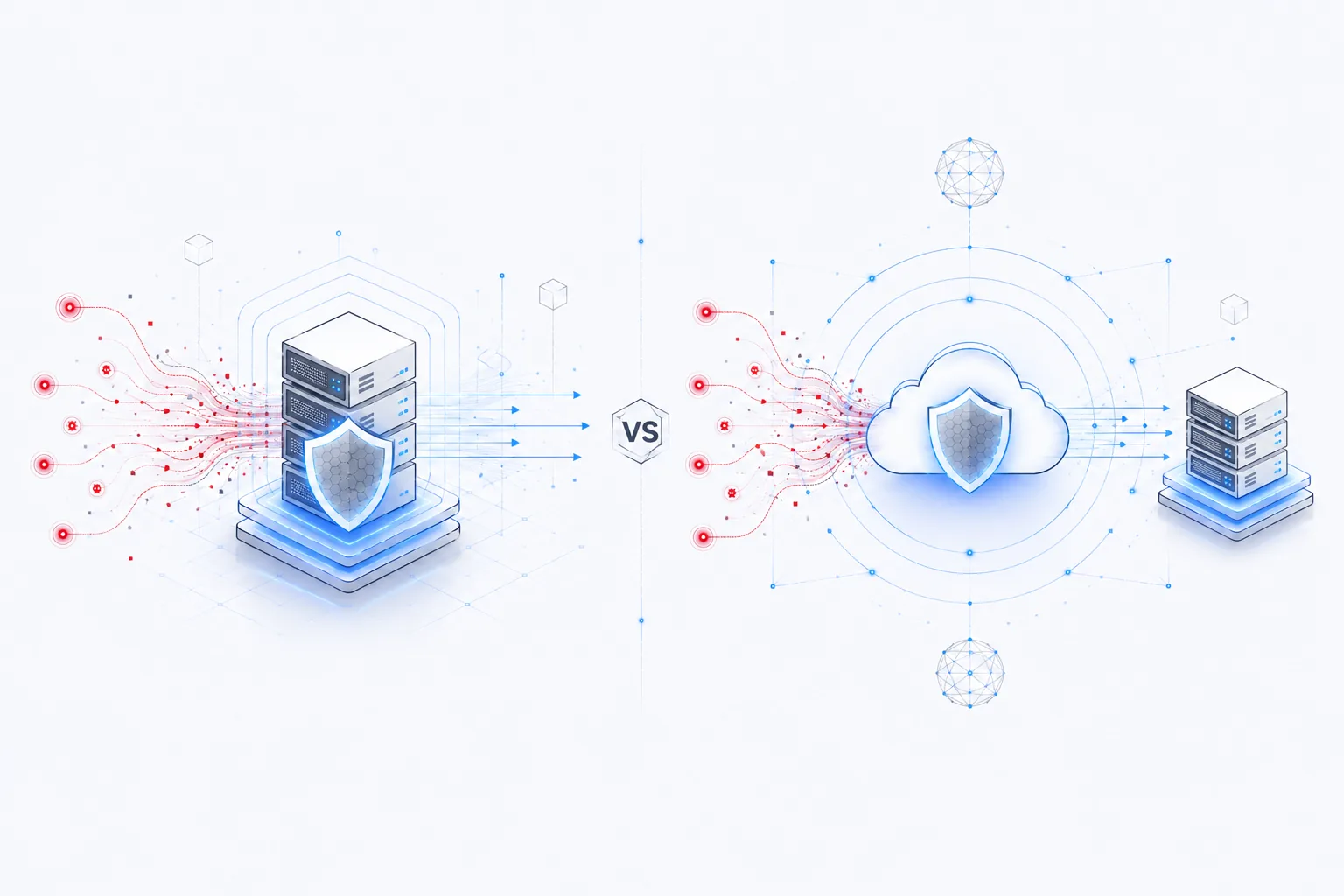
Attack traffic doesn’t care about billing models. A volumetric attack can push enormous traffic volumes in minutes. On metered infrastructure, that can generate massive charges before mitigation even starts.
So ask the uncomfortable question: Can your billing model survive an attack?
Security-focused environments often combine unmetered servers with upstream filtering. This ensures decisions are driven by protection priorities rather than invoice fear.
Unmetered bandwidth allows teams to absorb, filter, and mitigate without cost panic. It doesn’t stop attacks, but it removes the financial vulnerability they exploit.
Operational Predictability as a Strategic Advantage
Predictability rarely gets discussed, but it’s one of the biggest benefits of unmetered infrastructure. Metered environments create hesitation. Teams delay rollouts, reduce logging, or limit redundancy just to control costs.
That leads to another important question: Are you optimizing systems, or optimizing invoices?
Unmetered models remove internal friction. Architects can design for resilience, replication, and analytics without worrying about bandwidth penalties. Planning becomes technical rather than financial.
For growing platforms, this predictability is a strategic advantage. It supports long-term planning instead of reactive cost control.
Evaluating Providers Offering Unmetered Dedicated Servers
Choosing an unmetered dedicated server provider should never be based on headline claims alone. Many providers advertise “unmetered” as a simple selling point, but experienced buyers know the real difference lies in how the network is engineered and managed behind the scenes. The goal is not just cheap bandwidth – it’s consistent, sustainable performance.
A smart evaluation focuses on transparency. If a provider cannot clearly explain how their network handles load, congestion, or shaping policies, that lack of clarity is already a warning sign. Serious infrastructure partners are comfortable discussing these details because they operate for long-term reliability, not short-term conversions.
When comparing providers, pay attention to:
- Sustained throughput guarantees rather than burst-only speeds
- Clear fair-use definitions to avoid surprise limitations
- Transparency around traffic shaping policies
- Disclosure of network architecture and upstream carriers
- Historical congestion patterns and how they’re handled
- Willingness to answer technical questions without vague marketing language
Providers who avoid these discussions often rely on attractive pricing or big numbers while hiding real constraints. In infrastructure decisions, clarity usually correlates with reliability. For a reference point on what a clear answer sounds like, NexonHost’s unmetered dedicated servers state the terms in those words: no monthly transfer quota, no per-terabyte overage, inbound not metered either, and the port speed as the stated ceiling.
Practical Deployment Expectations
In real-world deployments, unmetered dedicated servers provide operational breathing room. They allow teams to push continuous outbound traffic, accept large inbound volumes, and handle spikes without triggering billing surprises. This stability simplifies forecasting and budgeting, especially for data-heavy platforms.
However, unmetered does not mean unmanaged. Removing billing pressure does not remove operational responsibility. Teams that treat unmetered bandwidth as “limitless” often end up masking inefficiencies rather than solving them.
In practice, responsible deployment still requires:
- Application-level rate controls to prevent abuse or runaway usage
- Active monitoring of traffic patterns to detect anomalies
- Capacity planning for sustained growth
- Alerting systems for unusual spikes or misuse
- Regular throughput testing under load
Unmetered bandwidth removes a financial constraint, not a technical one. When used strategically, it supports scale and resilience. When used carelessly, it can hide poor architecture decisions that eventually surface elsewhere.

Common Misconceptions About Unlimited Dedicated Servers
“Unlimited means there are no limits at all.”
This is the most common misunderstanding. In practice, unlimited or unmetered refers to billing models, not physics. Every dedicated server operates within real constraints – NIC capacity, switch backplanes, upstream routing, and packet-processing limits. What unmetered dedicated servers remove is usage-based billing, not technical ceilings. Providers still enforce fair-use policies to protect network stability, which is why understanding port speed and sustained throughput matters more than the word “unlimited.”
“Unmetered bandwidth is always cheaper.”
Unmetered is not inherently a cost-saving option – it is a risk-management option. For workloads with spiky or unpredictable traffic, unmetered pricing can prevent surprise overage costs and billing volatility. However, for consistently low-traffic workloads, metered plans may remain more economical. The real value of unmetered dedicated servers lies in cost predictability, not headline pricing.
“All unmetered providers deliver the same quality.”
This assumption leads to painful migrations. Network architecture varies widely between providers, even when specifications look identical on paper. Oversubscription ratios, upstream diversity, congestion management, and mitigation capacity all affect real-world performance. Two providers can advertise the same port speed while delivering radically different sustained throughput under load.
Misunderstanding these points often results in underperforming deployments, unexpected throttling, or forced infrastructure changes later.
Is Unmetered Right for You?
Unmetered dedicated servers tend to be the right choice when bandwidth is not just a resource, but a core dependency of the business.
They are particularly well-suited when:
- Traffic volumes fluctuate significantly or scale alongside customer growth
- Revenue or platform availability is directly tied to network performance
- Workloads involve media delivery, APIs, gaming, analytics, or large data transfers
- Exposure to traffic spikes or malicious activity makes predictable billing essential
In these scenarios, paying for predictable, high-capacity network access reduces operational uncertainty and simplifies capacity planning.
Unmetered models are less appropriate when:
- Traffic usage is consistently low and unlikely to change
- Budgets are fixed with no tolerance for higher baseline costs
- Compute or storage – not network throughput – is the primary bottleneck
In these cases, metered bandwidth can still be a rational choice.
Ultimately, the decision should be guided by traffic behavior and risk tolerance, not marketing language. Choosing unmetered infrastructure only makes sense when the network itself is a strategic constraint that must be removed – not merely optimized.
Bandwidth as a Core Infrastructure Metric
As workloads continue to decentralize and security threats intensify, bandwidth is no longer a secondary consideration – it is becoming a defining factor in infrastructure viability. Modern platforms are judged not just on whether they can move data, but on whether they can do so consistently, predictably, and without introducing operational or financial penalties.
This shift is why unmetered dedicated servers are increasingly treated as baseline infrastructure rather than a premium upgrade.
Providers that design their networks around sustained throughput, conservative capacity planning, and transparent bandwidth models are better positioned to support this reality. NexonHost’s approach reflects this direction, emphasizing predictable high-bandwidth performance over short-term capacity marketing, which aligns more closely with how serious, bandwidth-driven systems actually operate in production environments.
Deploy Server in Minutes
Dedicated Servers
FAQs
1. What are unmetered dedicated servers?
Unmetered dedicated servers provide bandwidth without usage-based billing, allowing sustained high traffic without overage charges while still operating within port speed limits.
2. Are dedicated unmetered servers truly unlimited?
No. They remove billing limits, not physical constraints. Throughput depends on network design, port speed, and provider capacity planning.
3. Who should use high bandwidth dedicated servers?
Organizations running streaming, SaaS, security, or data-heavy platforms benefit most from high bandwidth dedicated servers due to predictable traffic demands.
4. How do unmetered servers help with DDoS risks?
They prevent billing-related failures during attacks and allow mitigation strategies to operate without immediate cost escalation.
5. Are unlimited dedicated servers more expensive?
They often cost more upfront but reduce long-term financial risk by eliminating unpredictable bandwidth charges.