
























BlockDos Alternatives: Advanced DDoS Mitigation Without the Overpricing
DDoS attacks are no longer rare, short-lived disruptions. For businesses operating APIs, SaaS platforms, gaming services, e-commerce, or exposed infrastructure, attacks are persistent, adaptive, and increasingly expensive when handled incorrectly.
Many buyers turn to managed mitigation platforms like BlockDos, expecting simplicity and protection. What they often encounter instead is rigid pricing, limited infrastructure control, and mitigation models that don’t align with real-world traffic behavior.
This article is written for buyers evaluating BlockDos alternatives- not from a marketing lens, but from operational experience. You’ll learn how modern DDoS-protected dedicated servers, high-bandwidth dedicated servers, and infrastructure-first mitigation models deliver stronger protection without unnecessary cost inflation.
Organizations comparing BlockDos alternatives should evaluate whether protection covers only proxied web traffic or the entire network infrastructure. NexonHost’s remote DDoS protection filters malicious traffic upstream while allowing businesses to retain control over their existing servers and hosting locations.
Why DDoS Mitigation Models Differ So Widely
DDoS mitigation exists to solve one core problem: stopping malicious traffic before it exhausts network, compute, or application resources. The challenge is not whether mitigation exists, but where it happens and how it scales.
Centralized proxy-based services prioritize abstraction and simplicity. Infrastructure-based mitigation prioritizes control, capacity, and predictability. The difference matters when attacks move from theoretical to operational.
Businesses are not limited to proxy platforms when protecting websites and exposed applications from attacks. This comparison of DDoS protection without Cloudflare alternatives explains how upstream filtering and infrastructure-level mitigation can protect services beyond standard HTTP and HTTPS traffic.
What makes one DDoS mitigation model more expensive than another?
Cost differences usually come from centralized traffic processing, per-request billing, and rigid service tiers rather than actual mitigation effectiveness.
Deploy Server in Minutes
Dedicated Servers
Where BlockDos-Style Models Start to Break Down
For organizations evaluating BlockDos alternatives, it’s important to understand that BlockDos offers managed protection, but its architecture is fundamentally proxy-centric. Traffic is inspected, filtered, and forwarded through centralized layers, creating structural dependency and inflated cost.
In practice, this creates several constraints:
- Limited visibility into underlying network behavior
- Reduced flexibility during multi-vector attacks
- Pricing tied to mitigation “events” rather than capacity
- Dependency on provider response timelines
Businesses experiencing recurring attacks need mitigation that matches their traffic volume, exposed protocols, and operational requirements. NexonHost provides managed DDoS protection services with upstream traffic filtering, flexible deployment options, and protection for websites, APIs, servers, and direct-IP services.
Does proxy-based mitigation limit infrastructure flexibility?
Yes. It centralizes control but removes the operator’s ability to tune routing, capacity, and mitigation thresholds in real time.
A Different Mitigation Philosophy
Modern alternatives focus on DDoS-protected dedicated servers with mitigation embedded at the network edge. Instead of reacting after traffic floods a proxy, mitigation occurs upstream- before links saturate.
This approach emphasizes:
- High-capacity transit and peering
- Always-on filtering
- Predictable cost structures
- Full server-level control
Providers like NexonHost operate on this model, combining managed mitigation with dedicated infrastructure rather than abstracting it away.
Embedding mitigation directly into the hosting network reduces dependence on external proxy layers and provides greater control over server configuration. A dedicated server with DDoS protection combines isolated computing resources, high-capacity connectivity, and attack filtering within one infrastructure environment.
Why does mitigation closer to the network edge matter?
Because it prevents bandwidth and packet-processing exhaustion before traffic reaches the server or application stack.
High-Bandwidth Dedicated Servers as a Mitigation Multiplier
Bandwidth alone does not stop attacks, but insufficient bandwidth guarantees failure. Many BlockDos users underestimate how quickly volumetric attacks overwhelm narrow links.
High-bandwidth dedicated servers provide:
- Greater absorption capacity
- More time for mitigation logic to activate
- Reduced false positives during traffic spikes
Server location and regional connectivity also influence latency, routing stability, and mitigation performance. Businesses serving European users can evaluate a DDoS protected dedicated server in Europe for regional infrastructure combined with high-bandwidth attack protection.
Do high-bandwidth dedicated servers reduce DDoS impact?
Yes. They don’t replace mitigation, but they significantly reduce the likelihood of early saturation.
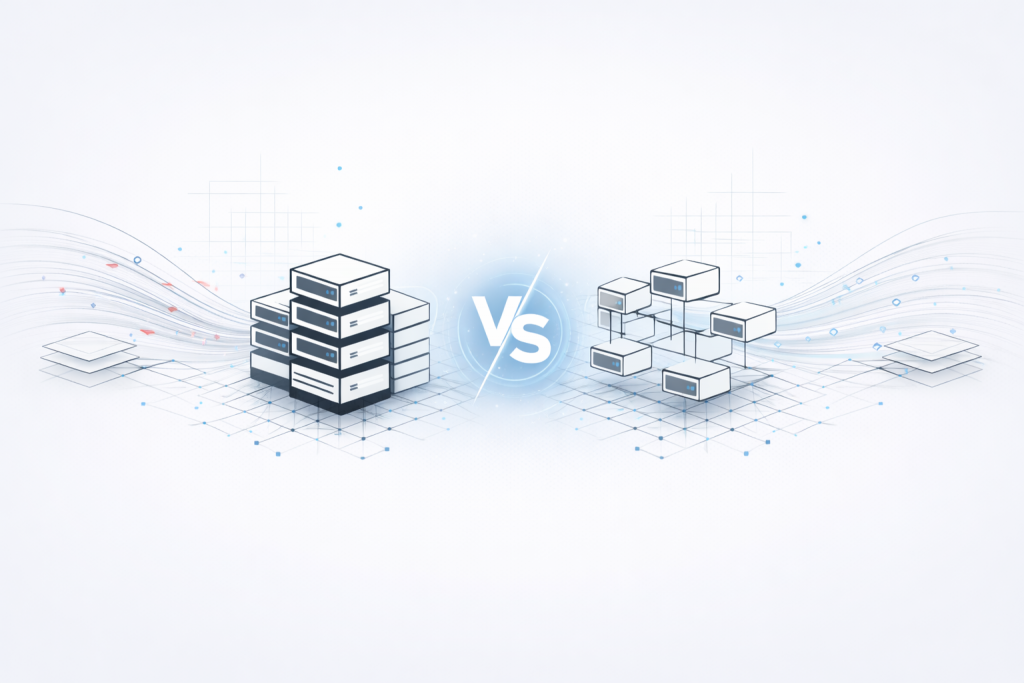
Managed Servers vs Managed Proxies
A critical distinction often missed during vendor evaluation is the difference between managed servers and managed proxies.
| Aspect | Managed Proxy Model | Managed Server Model |
|---|---|---|
| Traffic Control | Centralized | Customer-controlled |
| Cost Predictability | Variable | Fixed |
| Latency Impact | Moderate to high | Minimal |
| Custom Mitigation | Limited | Extensive |
| Scaling | Provider-dependent | Infrastructure-driven |
In some architectures, teams extend this control further by deploying a remote DDoS protection license that allows mitigation policies to operate independently of hosting location while preserving infrastructure-level control.
Which model offers more long-term control?
Managed server hosting with embedded DDoS mitigation provides greater operational control, more predictable scaling, and fewer performance trade-offs for production workloads.
What Real-World DDoS Protection Looks Like
In real environments, attacks are rarely single-vector. SYN floods, UDP amplification, HTTP floods, and slow-rate attacks often overlap.
Effective ddos dedicated server protection includes:
- Always-on network filtering
- Automated anomaly detection
- Manual escalation paths
- Transparent mitigation metrics
NexonHost’s infrastructure-first approach aligns with this reality by combining upstream filtering, high-capacity links, and managed intervention without routing traffic through opaque proxy layers.
Mitigation providers should be compared on network capacity, routing flexibility, attack visibility, deployment options, and technical support—not brand recognition alone. Organizations reviewing established scrubbing providers can explore Voxility alternatives for remote DDoS protection before selecting a network-level mitigation partner.
What usually fails first during a sustained DDoS attack?
Network capacity and packet-processing limits fail before CPU or storage.
Common Buyer Mistakes When Choosing BlockDos Alternatives
Several recurring mistakes appear during mitigation vendor selection:
- Overvaluing dashboards over capacity
- Paying for “events” instead of infrastructure
- Ignoring latency impact
- Underestimating sustained attack duration
Comparing providers only by advertised mitigation capacity can hide differences in server performance, bandwidth policies, network locations, and support quality. This review of Sharktech alternatives and NexonHost dedicated servers helps buyers assess protected hosting options using broader infrastructure criteria.
Why do many buyers overpay for DDoS protection?
Because pricing is tied to perceived complexity rather than actual mitigation resources.
When BlockDos May Still Make Sense
BlockDos can be suitable for:
- Low-traffic sites
- Non-latency-sensitive applications
- Teams without infrastructure expertise
However, for exposed production workloads, best managed server hosting with integrated mitigation offers stronger resilience and financial predictability.
Is proxy-based mitigation ever the best choice?
Yes, for small, static workloads, but rarely for high-traffic or latency-sensitive systems.
A More Sustainable Way to Think About DDoS Protection
Advanced DDoS mitigation is not about layers of abstraction- it’s about capacity, control, and validation under real attack conditions. Proxy-For Website DDoS Protection-centric services like BlockDos simplify onboarding, but that simplicity often comes at the cost of flexibility and long-term expense.
Infrastructure-first providers such as NexonHost approach server DDoS protection differently: mitigation is built into the network, bandwidth is treated as a prerequisite, and pricing aligns with real operational needs rather than hypothetical events.
For organizations running exposed workloads, this model offers a more sustainable balance between protection, performance, and cost without overpaying for complexity that doesn’t translate into resilience.
Deploy Server in Minutes
Dedicated Servers
FAQs
1. Are DDoS-protected dedicated servers more effective than proxy services?
Yes. They stop attack traffic earlier in the network path and avoid proxy-related latency and cost overhead.
2. Does high bandwidth eliminate the need for mitigation?
No. Bandwidth supports mitigation but does not replace filtering or traffic control.
3. Why are some DDoS services significantly more expensive?
Costs often reflect centralized processing and per-event billing rather than actual infrastructure capacity.
4. Is managed server hosting harder to operate than proxy services?
Not when mitigation and monitoring are included as part of the managed infrastructure.
5. Can mitigation be predictable in cost?
Yes. Infrastructure-based models typically offer fixed pricing instead of attack-based charges.