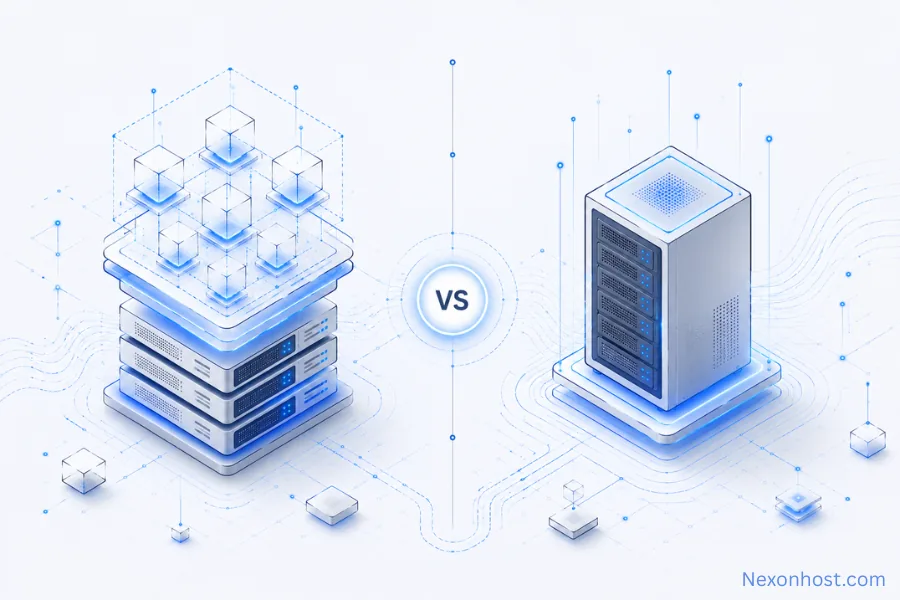
Who Offers Affordable DDoS Protection for Ecommerce Platforms?
Ecommerce platforms are no longer attacked only during peak sales events. They are probed continuously. Bot floods, application-layer exhaustion, and volumetric traffic spikes now target payment pages, login flows, and checkout APIs year-round.
If you run an ecommerce platform, the real question is not whether you need DDoS protection. It is whether your current setup can withstand sustained traffic abuse without degrading performance or customer trust.
This guide clarifies what “affordable” DDoS protection truly means in operational terms and how to evaluate the best remote ddos protection without confusing price with effectiveness. It explains the practical differences between remote mitigation and on-server filtering, outlines when a ddos protected dedicated server Europe is more appropriate than a VPS, and provides a structured way to assess providers offering best remote ddos protection across Europe.
It also sets realistic expectations for ecommerce operators during deployment. Cost matters, but resilience and continuity matter more.
Why Ecommerce Sites Are Frequent DDoS Targets
Ecommerce infrastructure is uniquely exposed. Unlike content websites, online stores combine:
- Public browsing traffic
- Authenticated user sessions
- Payment gateway interactions
- Inventory APIs
- Real-time cart processing
Each layer introduces potential attack vectors.
Why do attackers focus on ecommerce platforms?
- Direct revenue disruption
- Competitive sabotage
- Extortion attempts before major campaigns
- Bot scraping for pricing intelligence
Even low-grade application floods can degrade checkout performance without triggering obvious outages. Would a 20% latency increase during checkout be visible to your monitoring tools – or only to your abandonment rate?
Protection must therefore be proactive, not reactive.
What “Affordable DDoS Protection” Actually Means
Affordable does not mean cheap bandwidth or basic rate limiting. It means protection that:
- Prevents revenue loss
- Maintains performance during mitigation
- Avoids emergency migration costs
- Does not require constant manual intervention
True affordability is measured in operational stability.
Some ecommerce operators choose low-cost VPS hosting and add firewall rules. Others invest in a ddos protected europe server with embedded filtering. The difference becomes visible during sustained attacks.
What looks inexpensive during normal traffic often becomes expensive during disruption.
What Is Remote DDoS Protection?
Remote DDoS protection filters traffic upstream before it reaches your server.
Instead of relying solely on on-server defenses, traffic is routed through mitigation infrastructure capable of absorbing and filtering malicious packets.
This approach exists to solve three core problems:
- Bandwidth saturation before local filtering can act
- Application-layer attacks that overwhelm CPU resources
- Traffic spikes that mimic legitimate behavior
In Europe, europe remote ddos protection networks typically operate at major exchange points, allowing traffic inspection before it enters your hosting environment.
Why does this matter for ecommerce? Because filtering upstream prevents infrastructure collapse before your application has a chance to respond.
Core Protection Models for Ecommerce Platforms
Ecommerce teams generally evaluate three primary approaches.
1. VPS with Basic Firewall Rules
This is common among early-stage stores.
Pros:
- Low entry cost
- Flexible scaling
- Simple deployment
Cons:
- Limited volumetric absorption
- Application-layer filtering is minimal
- Risk of full bandwidth saturation
Can this qualify as the best ddos protection vps option? Only if it integrates upstream filtering rather than relying on software firewalls alone.
2. Remote DDoS Mitigation Layer + Existing Infrastructure
Here, traffic is routed through a remote scrubbing center before reaching your server.
Pros:
- Upstream filtering
- Protection without server migration
- Scalable mitigation capacity
Cons:
- Possible routing complexity
- Requires DNS or BGP configuration
- Performance tuning needed
When evaluating best remote ddos protection, ask: Does mitigation occur before congestion reaches your origin network?
3. DDoS-Protected Dedicated Infrastructure in Europe
A ddos protected dedicated server europe integrates hardware-level resources with embedded network filtering.
Pros:
- Predictable performance
- Dedicated CPU and network capacity
- Better isolation from other tenants
Cons:
- Higher baseline cost
- Requires traffic profiling
- Less elastic than VPS models
For mid-to-large ecommerce platforms, this often becomes the long-term solution.
Deploy Server in Minutes
Dedicated Servers
Europe as a Strategic Location for DDoS Protection
Why do many ecommerce operators choose European infrastructure?
- Strong interconnection density
- Centralized routing across EU markets
- Regulatory alignment with GDPR
- Mature data-center ecosystems
A ddos protected europe server can reduce both latency and regulatory ambiguity.
Does infrastructure location affect mitigation performance?
Yes. Mitigation closer to major exchange points improves filtering speed and reduces routing inefficiencies.
Key Components of Effective Ecommerce DDoS Protection
Effective protection is layered. Each component addresses a different failure point in ecommerce infrastructure.
- Network-layer volumetric filtering
Stops large traffic floods before they saturate your bandwidth. This must occur upstream, not after traffic reaches your server. - Application-layer request validation
Filters malicious HTTP requests that mimic real users. Essential for protecting login, checkout, and API endpoints from Layer 7 abuse. - Rate limiting at edge points
Controls excessive requests from single sources to prevent backend resource exhaustion during attack spikes. - Real-time monitoring dashboards
Provides visibility into traffic anomalies, mitigation status, and filtered requests so teams can differentiate attacks from legitimate surges. - Automated mitigation triggers
Activates filtering immediately when abnormal traffic patterns are detected. Manual intervention is too slow for serious events.
When assessing best remote ddos protection, clarify whether mitigation capacity reflects real absorption bandwidth or shared theoretical limits. That distinction determines whether protection holds under sustained pressure.
Practical Implementation Expectations
Deploying ecommerce-focused DDoS mitigation is not plug-and-play.
You should expect:
- Traffic profiling to establish baseline patterns
- Tuning thresholds for legitimate flash sales
- Coordinated testing before major campaigns
- Ongoing monitoring to detect false positives
What happens if your protection blocks legitimate traffic during peak sales?
This is why mitigation tuning matters.
Teams should also prepare for:
- DNS propagation delays during initial routing
- Temporary latency fluctuations during traffic rerouting
- Cross-team coordination between DevOps and security
Infrastructure resilience requires operational discipline.

Rethinking DDoS Protection Assumptions in Ecommerce
“Small stores don’t need advanced protection.”
Attackers do not exclusively target large marketplaces. In many cases, smaller ecommerce sites are probed precisely because they are assumed to have weaker defenses. Automated botnets scan for exposed applications, misconfigured servers, and unprotected APIs.
A modest revenue operation can still face service disruption, cart abandonment, and reputational damage. The assumption that scale equals risk often leads smaller businesses to delay investing in the best remote ddos protection until after an incident.
“Cloud hosting includes sufficient DDoS protection by default.”
Most cloud environments include baseline network safeguards, but these are typically designed to mitigate low-volume or generic volumetric events.
Sustained Layer 7 floods targeting checkout endpoints, search functions, or login APIs can bypass minimal filtering. Without structured europe remote ddos protection that operates upstream and at the network edge, traffic may reach the application layer before mitigation begins. At that stage, performance degradation is already visible to customers.
“Remote mitigation slows performance.”
Improperly engineered routing can introduce latency. However, modern europe remote ddos protection architectures are designed to stabilize traffic flows by filtering malicious packets before they consume server resources. In practice, well-configured remote filtering often improves stability during peak demand because legitimate traffic is separated from malicious bursts before it affects the origin server.
“A firewall is enough.”
Firewalls are policy enforcement tools, not traffic absorbers. They evaluate rules and block known patterns, but they cannot absorb large-scale bandwidth saturation. Once uplink capacity is overwhelmed, firewall logic becomes irrelevant. Effective protection requires upstream scrubbing capacity combined with local enforcement controls.
VPS or Dedicated for Ecommerce DDoS Protection?
Infrastructure choice should reflect business risk tolerance, traffic profile, and operational maturity.
Consider a VPS If:
- Traffic is moderate and predictable
For stores with steady volumes and limited peak volatility, a best ddos protection vps can offer cost-efficient mitigation with adequate isolation. When upstream filtering is integrated correctly, VPS environments can handle meaningful attack scenarios without requiring dedicated hardware. - Budget is constrained but uptime remains critical
Startups and growing stores often need a balance between protection and cost. A well-architected ddos protected europe server in a VPS configuration provides resilience without enterprise-scale pricing. - Elastic scaling is required
If workloads fluctuate seasonally, VPS environments allow vertical or horizontal adjustments without major infrastructure redesign. - Upstream filtering is integrated
The key qualifier is upstream mitigation. Without it, VPS instances remain vulnerable to saturation at the network level.
Consider a DDoS Protected Dedicated Server Europe If:
- Revenue per minute is high
For platforms where every minute of downtime translates into measurable financial loss, a ddos protected dedicated server europe provides greater control over resource allocation and mitigation capacity. - Flash sales or high-intensity campaigns are common
Marketing events amplify both legitimate traffic and attack exposure. Dedicated infrastructure reduces contention and improves isolation under stress. - Sensitive payment flows are processed directly
Payment APIs and authentication systems require predictable latency. Dedicated servers reduce performance variability and enhance compliance posture. - Latency consistency is mission-critical
Dedicated hardware minimizes shared-resource interference, which is valuable for real-time inventory management and checkout stability.
Is hybrid deployment possible?
Yes. Many ecommerce operators combine a best ddos protection vps for supporting services – such as analytics, staging, or content delivery – while reserving a ddos protected dedicated server europe for checkout, payment, and authentication flows. This layered model distributes risk and aligns infrastructure cost with business impact.
How NexonHost Approaches Ecommerce DDoS Resilience
For ecommerce platforms seeking structured mitigation without excessive overhead, NexonHost integrates europe remote ddos protection directly into its hosting architecture rather than offering it as a superficial add-on.
This approach typically includes:
- Application-level filtering
Targeting Layer 7 floods and request-based abuse patterns that affect carts, login portals, and APIs. - Network-layer mitigation
Absorbing volumetric attacks upstream before they saturate local bandwidth. - European hosting alignment
Providing ddos protected europe server options within regulated, performance-optimized environments.
Instead of marketing generic capacity, NexonHost emphasizes architectural transparency – detailing how mitigation is applied, where filtering occurs, and how traffic is routed during attack events. For ecommerce teams, clarity around mitigation mechanics is often more valuable than raw headline numbers.
When DDoS Protection Alone Is Not Sufficient
Even the best remote ddos protection cannot compensate for weaknesses at the application layer.
Protection does not replace:
- Application hardening
Poorly optimized code, exposed endpoints, and inefficient database queries magnify the impact of traffic spikes. - Secure coding practices
Input validation, authentication controls, and dependency management remain critical. - API rate limiting
Without internal throttling, legitimate and malicious bursts can both overwhelm backend logic. - Bot management and scraping control
Automated scraping can strain resources without triggering volumetric alerts.
Infrastructure-level filtering protects availability. Application-level resilience protects integrity and performance. Ecommerce security must be layered.
A ddos protected europe server combined with disciplined software architecture offers stability under pressure. Without that balance, mitigation becomes reactive rather than preventative.
Deploy Server in Minutes
Dedicated Servers
FAQs
1. What is the best remote DDoS protection for ecommerce?
The best remote ddos protection filters traffic upstream before it reaches your server, includes application-layer inspection, and scales beyond typical volumetric attack thresholds. For ecommerce, protection must preserve checkout performance during mitigation.
2. Is a DDoS-protected VPS enough for online stores?
A best ddos protection vps can be sufficient for small-to-midsize stores if it includes upstream filtering and rate limiting. However, high-revenue platforms often require dedicated infrastructure to ensure consistent performance under sustained load.
3. Why choose a DDoS protected dedicated server Europe?
A ddos protected dedicated server europe provides predictable CPU and network capacity, stronger isolation, and alignment with EU compliance standards. It is well suited for platforms handling high transaction volumes.
4. Does Europe remote DDoS protection improve performance?
Properly implemented europe remote ddos protection can reduce packet loss and stabilize routing by filtering malicious traffic before congestion occurs. Performance depends on network design and exchange proximity.
5. Is DDoS protection expensive for ecommerce platforms?
Costs vary by scale. Affordable protection is measured not by monthly fees alone but by avoided downtime, preserved revenue, and reduced emergency migration costs.
Resilience as Revenue Insurance, Not Just Infrastructure
For ecommerce platforms, resilience is no longer a technical enhancement – it is revenue insurance. As attack patterns evolve and transaction volumes increase, your infrastructure must function as a protective perimeter, not simply a hosting container.
Affordable DDoS protection is not about selecting the lowest monthly quote. It is about ensuring that mitigation holds under real pressure – during peak campaigns, payment surges, or coordinated attack attempts – without degrading checkout performance or customer trust.
Providers such as NexonHost approach this differently by embedding remote filtering and European network-level mitigation into their hosting architecture, rather than treating protection as an optional afterthought. This model aligns cost with continuity.
Ultimately, infrastructure choices shape operational stability. In ecommerce, stability is not a luxury – it is the foundation of customer confidence and long-term growth.