


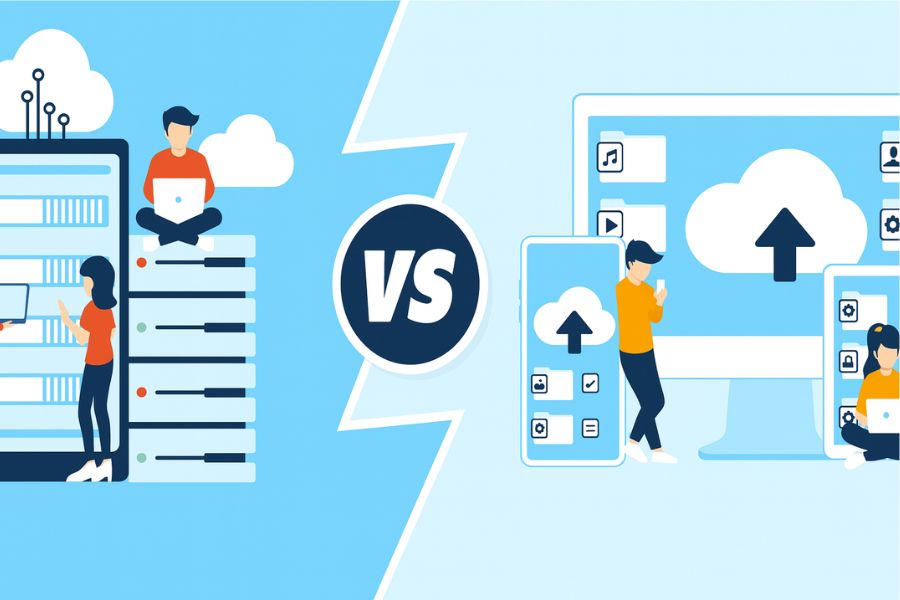
Dedicated Server Colocation vs Cloud Hosting: Which Is Right for You?
In 2025, European enterprises are rethinking how they host and manage critical workloads. The choice is no longer just about servers but about strategy, compliance, and long-term sustainability. Should you colocate hardware in professional data centers or embrace the scalability of cloud hosting?
Both server colocation and cloud hosting have their strengths. Colocation ensures predictable costs, compliance with European regulations like GDPR and NIS2, and full hardware control. Cloud hosting provides agility, pay-as-you-go scalability, and global reach. The challenge is determining which model best suits your business needs.
Businesses frequently ask: “What is a DDoS protected dedicated server?” The answer is: a dedicated server, often colocated in a Tier III+ European facility, that integrates DDoS mitigation services and SLA-backed uptime guarantees.
This guide explores cost, SLA commitments, customization, scalability, and compliance to help you decide whether colocation or cloud hosting is the smarter choice.
Many organizations choose server colocation when they need complete hardware ownership but want to avoid the cost of building and maintaining their own data center. This approach gives businesses stronger control over performance, compliance, and long-term infrastructure planning.
For organizations that need maximum hardware control without investing in their own data center facilities, server colocation provides a practical middle ground. Businesses retain ownership of their infrastructure while benefiting from enterprise-grade power, cooling, connectivity, and security delivered by professional European data centers.
What Is Server Colocation?
Server colocation is the practice of housing privately owned servers in third-party data centers. Rather than building and maintaining expensive infrastructure in-house, businesses lease rack space, power, cooling, and connectivity from colocation providers.
Key features of colocation include:
- Rack space: Available per U, half rack, or full rack depending on requirements.
- Power redundancy: UPS systems and generators keep servers online during power outages.
- Cooling systems: Precision HVAC ensures consistent operating temperatures.
- Carrier-neutral connectivity: Access to multiple ISPs and premium bandwidth.
- Physical security: 24/7 CCTV, biometric access, and compliance certifications.
A common question is: “Which type of server is best?” The answer is: enterprise-grade hardware with ECC memory, redundant power supplies, and NVMe storage delivers optimal performance in colocation environments.
With colocation, businesses retain ownership of hardware while outsourcing facility management to professionals.
As infrastructure requirements grow, businesses often move beyond basic rack space and choose server colocation services that include power, cooling, connectivity, remote hands, and physical security. This helps reduce operational burden while keeping full control over owned hardware.
What Is Cloud Hosting?
Cloud hosting is a model where businesses rent virtualized compute, storage, and networking resources from providers like AWS, Azure, or Google Cloud. Instead of managing physical servers, enterprises consume resources via APIs, dashboards, and managed services.
Advantages include:
- Elasticity: Instantly scale up or down based on demand.
- Global distribution: Deploy workloads across multiple regions.
- Automation: APIs and orchestration tools streamline operations.
- Lower entry costs: No upfront hardware investment.
Executives often ask: “Is a dedicated server better than VPS?” The answer is yes. Dedicated servers outperform VPS in stability and performance, but cloud hosting offers flexibility where workloads are unpredictable.
Cloud is attractive for startups and companies needing global reach. However, costs can escalate quickly as workloads grow.
Businesses that need scalability but want stronger pricing control often compare public cloud platforms with cloud hosting solutions built for predictable performance. This gives teams more flexibility without depending entirely on hyperscale cloud pricing models.
Cost Analysis: Colocation vs Cloud
Cost is one of the most debated factors when comparing colocation and cloud.
- Colocation:
- Rack space fees: €50–€150 per U/month.
- Bandwidth packages: €200–€500/month depending on Gbps.
- Power charges based on kWh.
- Setup and cross-connect fees apply.
- Hardware ownership reduces OPEX in the long term.
- Rack space fees: €50–€150 per U/month.
- Cloud Hosting:
- Pay-as-you-go for compute, storage, and bandwidth.
- Attractive for small-scale deployments.
- Long-term costs rise significantly for stable workloads.
- Hidden costs: egress fees, reserved IPs, snapshots.
- Pay-as-you-go for compute, storage, and bandwidth.
A frequently asked question is: “How much does a dedicated server cost?” The average in Europe is €150–€400/month for a premium server. With colocation, costs also include rack space and power, but long-term total cost of ownership often beats cloud costs for enterprises running consistent workloads.
Enterprises comparing hosting budgets should review cost effective server colocation europe 2025 options before committing fully to cloud. For stable workloads, predictable rack, power, and bandwidth costs can often be easier to control than recurring cloud usage fees.
SLA Commitments and Reliability
Reliability is where colocation shines.
- Colocation SLA uptime guarantee:
- Typically 99.9%–100%.
- Includes redundant power, cooling, and multiple carriers.
- Compensation credits if uptime drops below SLA.
- Typically 99.9%–100%.
- Cloud Hosting SLA:
- Varies by provider.
- Often excludes certain outages or maintenance windows.
- Shared responsibility model adds complexity.
- Varies by provider.
A frequent query is: “What is the most reliable server?” The most reliable option is a dedicated server placed in a Tier III+ European colocation facility with SLA-backed uptime and DDoS mitigation.
Cloud reliability depends on the provider’s shared infrastructure and may not guarantee local data sovereignty.
Control and Customization
One of the clearest differences between server colocation and cloud hosting is the level of control enterprises retain over their infrastructure.
- Colocation: Businesses own their hardware and retain full authority over operating systems, applications, and networking configurations. They can choose specific server brands, install enterprise-grade CPUs, expand storage with NVMe drives, and implement custom firewalls or DDoS mitigation tools. Enterprises also decide when to upgrade hardware, patch operating systems, or roll out performance enhancements. This level of freedom is ideal for organizations that demand precise optimization, compliance-driven setups, or specialized workloads such as financial applications, AI/ML processing, or secure government platforms.
- Cloud Hosting: While convenient, cloud limits customization. Users select from pre-set virtual machine configurations and are restricted to the provider’s hardware, hypervisor, and network ecosystem. Cloud services abstract away the hardware layer, which speeds deployment but restricts flexibility.
IT managers frequently ask: “Is dedicated IP faster?” The answer is yes. Dedicated IPs offer consistent routing, lower latency, and eliminate shared-IP blacklisting issues. Colocated servers almost always include dedicated IP addresses, enhancing stability and performance.
For enterprises that prioritize customization and complete infrastructure control, colocation is the superior choice, whereas cloud hosting suits businesses needing quick deployment and convenience.
For organizations that need full authority over server hardware, networking, and security configuration, dedicated server colocation europe is a better fit than generic cloud instances. It supports custom infrastructure design while still using professional European data center facilities.
Scalability: Cloud Elasticity vs Colocation Growth
When it comes to scalability, cloud hosting has a clear advantage in terms of speed and convenience. With just a few clicks, enterprises can instantly add CPU cores, memory, or storage to accommodate a traffic spike. This elasticity is especially valuable for industries like eCommerce, where seasonal campaigns generate sudden surges, or for SaaS providers onboarding thousands of new users in a short time. The pay-as-you-go model allows scaling resources up or down in minutes, making the cloud highly flexible for workloads with unpredictable demand.
By contrast, server colocation scales in a more deliberate way. Growth requires adding physical servers, racks, or cages inside the data center. While this involves hardware procurement and planning, it ensures predictable costs and performance per euro spent. Colocation offers stable long-term scalability, particularly for enterprises with steady workloads and compliance requirements.
Many businesses use a hybrid model, combining colocation for mission-critical, stable workloads with cloud for short-term elasticity.
Executives often ask: “How much does Bluehost cost?” Bluehost may provide VPS for €20–€30 per month, but such consumer-grade services cannot deliver enterprise-grade SLA uptime guarantees or GDPR compliance.
Ultimately, scalability decisions depend on whether you prioritize instant elasticity or predictable long-term growth.
Compliance and Data Sovereignty in Europe
For European enterprises, compliance and data sovereignty are just as critical as performance and cost. Regulations such as GDPR and NIS2 set strict requirements for how personal data is stored, processed, and protected. Non-compliance can result in fines worth millions of euros, reputational loss, and legal complications.
- Colocation: By hosting servers in European colocation facilities, businesses can ensure that data remains within EU borders. Many providers back this with certifications like ISO 27001, PCI DSS, and SOC 2, which demonstrate adherence to international and regional security standards. Colocation also gives enterprises control over hardware, encryption, and access policies essential for industries like healthcare, finance, and government.
- Cloud Hosting: While cloud offers scalability, it often routes data through global networks. Depending on the provider’s infrastructure, sensitive information may leave Europe, raising sovereignty and compliance concerns. Some cloud vendors do offer EU-only regions, but businesses must carefully evaluate SLA guarantees and data-handling policies.
A common question arises: “Do you need a good GPU to run a dedicated server?” The answer is no. GPUs are useful for AI/ML or rendering workloads but irrelevant for compliance, DDoS protection, or typical enterprise hosting.
For enterprises prioritizing sovereignty and regulatory alignment, colocation is the safer, more reliable option.
Managed Private Cloud vs Colocation
Managed private cloud combines the best of both worlds: dedicated resources hosted in a provider’s data center but fully managed by their team.
- Colocation: You own and manage the hardware.
- Managed Private Cloud: Provider owns and manages the hardware for you.
- Hybrid: Mix of owned servers in colocation and rented managed private cloud resources.
Businesses often ask: “What is the best dedicated IP provider?” The best providers are those offering RIPE-assigned IP ranges with integrated DDoS mitigation and reputation monitoring.
For enterprises with limited IT staff, managed private cloud is attractive. For those with skilled teams, colocation offers more control.
Companies without a large internal operations team can pair colocation or private cloud with infrastructure management services to handle monitoring, patching, maintenance, and incident response. This keeps infrastructure reliable without forcing internal teams to manage every technical detail.
Industry Use Cases: Who Should Choose What?
Different industries have distinct requirements that influence their choice:
- Finance & Banking: Require compliance, low-latency, and predictable uptime. → Colocation wins.
- Healthcare: Patient data sovereignty is paramount. → Colocation preferred.
- Gaming: Requires low-latency global reach. → Cloud + colocation hybrid works best. Gaming platforms, SaaS providers, and latency-sensitive applications targeting Eastern Europe can benefit from a Romania dedicated server for stronger regional performance. It offers a useful balance of connectivity, infrastructure cost, and proximity to Central and Eastern European users.
- Government: Sovereignty and SLA uptime guarantee make colocation essential.
Questions often arise:
- “Which is the best server in the world?” → The best depends on workload, but enterprise-grade servers colocated in Tier III+ facilities provide unmatched reliability.
- “What is the best CPU for a dedicated server?” → AMD EPYC and Intel Xeon CPUs dominate due to performance and reliability.
Each industry must balance compliance, cost, and performance.
Which Model Fits Your Enterprise?
Both server colocation and cloud hosting deliver value, but they serve different strategic purposes.
- Colocation: Best for enterprises needing control, compliance, predictable costs, and colocation SLA uptime guarantees.
- Cloud: Best for businesses that require agility, global reach, and instant elasticity.
- Hybrid: Combines the strengths of both stable workloads in colocation, burst workloads in the cloud.
A common query is: “Does Contabo VPS have GPU?” Yes, but consumer-grade VPS cannot match enterprise-grade colocation or managed private cloud solutions.
Ultimately, choosing between colocation and cloud depends on workload stability, compliance requirements, and long-term IT strategy. Providers like NexonHost deliver the best of both worlds, offering enterprise colocation with managed private cloud integration for scalable, compliant growth in 2025.