


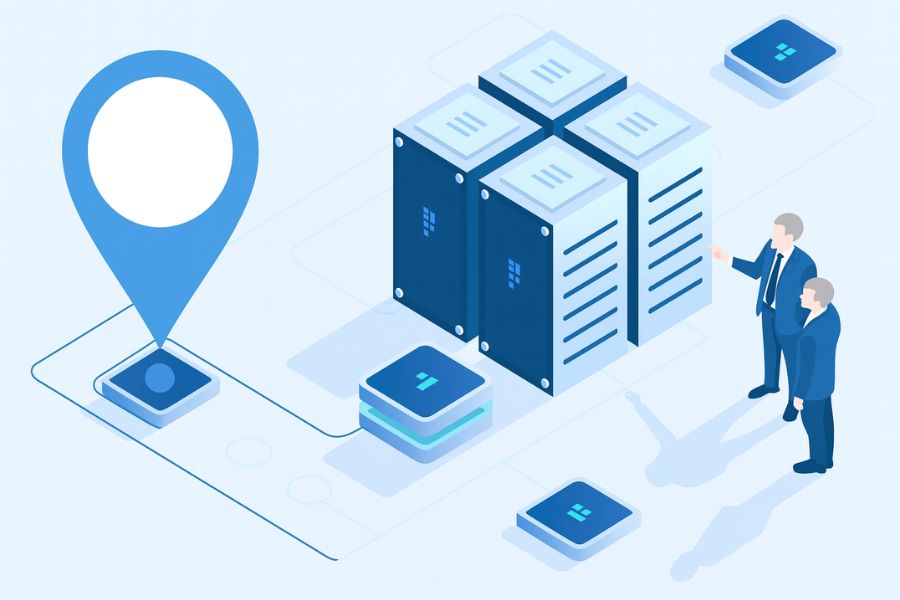
Cost-Effective Server Colocation in Europe: What to Look For in 2025
In 2025, the European hosting market is being reshaped by the twin pressures of cost optimization and compliance. Enterprises from eCommerce to banking are finding that traditional on-premises data centers are increasingly difficult to sustain. Rising energy prices, strict GDPR and NIS2 compliance rules, and escalating demands for uptime and scalability make private infrastructure costly and risky.
This has led to a surge in cost-effective server colocation, where businesses rent rack space, power, cooling, and network connectivity in specialized third-party data centers. The model allows companies to enjoy the reliability of enterprise-grade facilities without shouldering massive capital expenditure.
For businesses trying to reduce infrastructure costs without losing control over hardware, server colocation offers a practical middle ground between expensive in-house data centers and unpredictable cloud spending. It gives companies access to secure racks, redundant power, cooling, and enterprise connectivity while keeping ownership of their servers.
Executives often ask: “Which type of server is best?” The best option in 2025 is not merely about CPU power or storage; it’s about placing servers in enterprise colocation hosting facilities equipped with SLAs, redundancy, and compliance certifications.
What Is Cost-Effective Server Colocation?
Cost-effective server colocation means renting the physical environment to house your servers while outsourcing power, cooling, security, and connectivity to the provider. Instead of building and maintaining a private facility, businesses share infrastructure costs with others, reducing overall expenses.
When comparing providers, businesses should look beyond rack space and evaluate the full scope of server colocation services, including power density, carrier access, remote hands, SLA coverage, and security standards. These details determine whether colocation actually lowers long-term operating costs or simply shifts expenses elsewhere.
Key benefits include:
- Lower total cost of ownership (TCO) compared to running an in-house data center.
- Access to enterprise-grade infrastructure such as Tier III or Tier IV certified facilities.
- Predictable monthly fees for budgeting.
- Built-in redundancy for power, cooling, and network connectivity.
A common question is: “How much does a dedicated server cost?” Pricing often starts from €150–€400 per month. However, with colocation, the true value is not just the server it’s the additional layer of redundancy, uptime guarantees, and compliance that enterprise facilities provide.
Enterprise Benefits of Colocation Hosting
For enterprises across Europe, colocation hosting delivers mission-critical advantages that go far beyond cost savings. The model ensures that infrastructure is housed in Tier III or Tier IV certified facilities, with built-in redundancy, compliance, and scalability. Enterprises comparing server colocation vs cloud hosting Europe should focus on workload predictability, compliance needs, and cost control. Cloud can work well for variable demand, but colocation is often stronger for stable, high-value workloads that need hardware control and predictable monthly pricing.
Key benefits include:
- Guaranteed uptime: Colocation providers back services with SLA uptime guarantees of 99.9% or higher. Advanced monitoring and automated failover systems ensure continuity even during unexpected failures, making uptime a measurable and enforceable standard.
- Scalability: Businesses can add racks, increase bandwidth, or expand power allocation incrementally. This flexibility removes the need for heavy upfront capital expenditure while allowing enterprises to respond quickly to growth demands.
- Compliance: Facilities are fully aligned with European regulations such as GDPR, ISO 27001, and NIS2. Audit-ready reporting and strict access controls reduce legal and regulatory risks.
- Performance: Direct connectivity to premium carriers and peering networks ensures low-latency performance. This is especially critical for industries like fintech, healthcare, gaming, and eCommerce, where milliseconds matter.
Executives often ask: “What is the most reliable server?” The answer is simple: a dedicated server colocated in a Tier III or Tier IV European data center, supported by redundancy, compliance, and high performance.
Factors That Make Colocation Cost-Effective
Colocation is not only about outsourcing infrastructure it is about delivering maximum value while controlling long-term costs. Several factors contribute to why colocation remains one of the most cost-effective hosting models for enterprises in Europe:
- Shared infrastructure costs: By pooling resources such as power, cooling, and physical security across multiple tenants, colocation providers achieve economies of scale. This significantly reduces the cost per customer compared to operating a private facility.
- Energy efficiency: Modern data centers use advanced cooling techniques such as hot/cold aisle containment and liquid cooling. These reduce energy waste, lower operating expenses, and pass savings onto clients.
- Bulk bandwidth procurement: Providers negotiate high-volume carrier contracts, allowing enterprises to access premium bandwidth at a fraction of retail pricing, while still benefiting from low-latency global connectivity.
- 24/7 NOC monitoring: Continuous surveillance and proactive management prevent unplanned downtime. This ensures enterprises avoid the high costs of outages and service disruptions.
- Predictable pricing: Unlike cloud hosting, where costs can fluctuate with usage, colocation delivers stable, contract-based pricing, making long-term budgeting more reliable.
Executives often ask: “Is a dedicated server better than VPS?” The answer is yes for long-term value. Dedicated servers colocated in enterprise facilities provide superior reliability, compliance, and cost efficiency.
SLA Uptime Guarantees in European Colocation
One of the strongest reasons enterprises choose colocation in Europe is the Service Level Agreement (SLA) uptime guarantee. In 2025, most providers commit to 99.9% or even 100% uptime, but the real differentiator is how these guarantees are monitored and enforced. Modern colocation facilities rely on DCIM (Data Center Infrastructure Management) tools to ensure these promises are not just marketing claims but measurable outcomes.
Key elements that make SLA uptime guarantees valuable include:
- Monitoring: Real-time analytics track power, cooling, and bandwidth performance across racks. Any deviation from normal ranges triggers immediate alerts.
- Incident logging: Automatic records document every anomaly, allowing enterprises to verify SLA compliance with detailed reports during audits.
- Proactive adjustments: Systems automatically balance loads across servers, adjust cooling, and reroute network traffic to prevent downtime.
- Transparency: Providers share SLA reports, giving enterprises visibility into how performance commitments are met.
A common query is: “Is dedicated IP faster?” The answer is yes especially when colocated in a facility with SLA-backed guarantees. The combination of dedicated IPs, real-time monitoring, and SLA enforcement ensures consistent routing, predictable latency, and unmatched reliability.
Compliance and Security in 2025
For enterprises operating in Europe, compliance and security are no longer optional they are mandatory requirements. Colocation providers in 2025 design their facilities around strict regulatory standards to ensure businesses remain audit-ready and fully protected. Key elements include:
- Physical security: Facilities implement biometric access controls, mantraps, CCTV surveillance, and on-site security staff. These measures prevent unauthorized access and safeguard critical infrastructure.
- Data protection: Providers deliver encrypted connectivity, firewalls, and secure access logs. Every login and physical entry is tracked, ensuring traceability for audits.
- Audit-ready reports: With integrated DCIM tools, enterprises receive automated compliance logs covering uptime, access attempts, and system performance, making GDPR and NIS2 audits seamless.
- Regulatory alignment: Colocation facilities maintain certifications for GDPR, PCI-DSS, HIPAA, and ISO 27001, ensuring sensitive data is protected according to European and global standards. Location also matters when compliance, latency, and regional control are part of the hosting decision. A Romania dedicated server can support European businesses that need dedicated infrastructure in a cost-efficient EU location with strong connectivity and data residency advantages.
- Resilience through redundancy: Security extends beyond compliance to include redundant power, cooling, and connectivity that protect workloads from downtime.
Executives often ask: “Do you need a good GPU to run a dedicated server?” The answer is no. True reliability depends on compliance-driven infrastructure, security monitoring, and redundancy, not on GPU processing capacity.
Cost vs Cloud Hosting: When Colocation Wins
Cloud hosting has grown rapidly due to its flexibility, but colocation often delivers greater long-term value for enterprises with predictable workloads.
For companies that already own or plan to deploy physical hardware, dedicated server colocation Europe can provide better control, stronger compliance alignment, and improved uptime compared to running servers on-premises. This is especially useful for businesses with sensitive workloads, fixed infrastructure requirements, or strict data residency needs. The comparison highlights key differences:
- Cloud advantages: Elastic scaling and pay-as-you-go billing make cloud ideal for startups or businesses with highly variable demand. It allows rapid deployment without upfront hardware costs.
- Colocation advantages: Predictable monthly pricing, enterprise-grade SLAs, and built-in compliance with GDPR and NIS2. Colocation also provides more control over hardware and applications, reducing hidden costs tied to scaling in the cloud.
- Hybrid model: Many enterprises combine colocation for mission-critical workloads with cloud for burst capacity, ensuring both stability and flexibility.
Businesses often ask: “How much does Bluehost cost?” Entry-level shared hosting is €3–€10/month, but it lacks compliance, SLAs, and resilience. For enterprises that cannot risk downtime, colocation hosting wins every time.
24/7 NOC Support and Scalability
Enterprise colocation goes beyond racks and power; it delivers round-the-clock Network Operations Center (NOC) support. Colocation becomes more effective when businesses also have expert support for monitoring, maintenance, and issue resolution. With infrastructure management services, teams can reduce operational burden while ensuring servers, networks, security, and uptime are actively managed.
- Proactive monitoring ensures issues are resolved before clients notice.
- Rapid response times minimize downtime.
- Scalable infrastructure allows seamless expansion as business grows.
Industries Driving Colocation Demand
Colocation is fueling digital transformation across industries:
- Finance & Banking: Transaction-heavy platforms require zero downtime.
- Healthcare: Compliance with GDPR and HIPAA is non-negotiable.
- eCommerce: Colocation prevents abandoned carts caused by downtime. Not every business needs full colocation from day one, especially smaller websites or content-heavy brands that mainly need reliable managed hosting. In those cases, WordPress hosting can be a simpler starting point before moving toward dedicated or colocated infrastructure as traffic, compliance, and performance needs increase.
- Gaming & Esports: Low-latency hosting keeps players engaged.
- Government & Public Sector: Critical services rely on colocation for resilience.
Question tie-in: “Which is the best server in the world?” The best is an enterprise-grade colocated server in a Tier IV European facility.
What to Look For in a Colocation Provider (Checklist)
When evaluating colocation providers in 2025, enterprises should focus on:
- Data center certification: Tier III or IV.
- Transparent pricing: No hidden costs for power or bandwidth.
- SLA guarantees: Clear commitments to 99.9%+ uptime.
- Compliance certifications: GDPR, ISO 27001, NIS2.
- Scalability options: Modular racks, bandwidth, and storage.
- 24/7 support: NOC monitoring and dedicated staff.
Executives often ask: “What is the best dedicated IP provider?” The most reliable choice is a provider offering RIPE-assigned IPs with colocated infrastructure monitoring.
Why Cost-Effective Colocation is the Future
- Balanced value: Colocation in 2025 is no longer just about renting rack space it’s about combining cost savings, scalability, compliance, and resilience into one package. By leveraging shared infrastructure, enterprises reduce capital expenses while gaining access to Tier III and Tier IV facilities that would be prohibitively expensive to build and manage privately.
- Strategic investment: Enterprises must view colocation as a long-term infrastructure strategy, not just a tactical hosting decision. With predictable monthly pricing, SLA uptime guarantees, and built-in compliance, colocation ensures businesses remain competitive while meeting regulatory requirements.
- Trusted providers: Companies like NexonHost deliver enterprise colocation hosting designed to meet both technical demands (uptime, performance, scalability) and business objectives (cost efficiency, compliance, risk reduction). This dual focus makes colocation an essential component of enterprise digital transformation.
Practical reality: Executives often ask: “Does Contabo VPS have GPU?” Yes, in some cases. But true reliability and performance come from colocated enterprise servers backed by 24/7 monitoring, redundancy, and compliance assurance. For businesses that cannot risk downtime, cost-effective colocation is the future-proof choice.